When the Ice Goes Away, Buoys Come Out to Play – A Blue Heron Photo Story
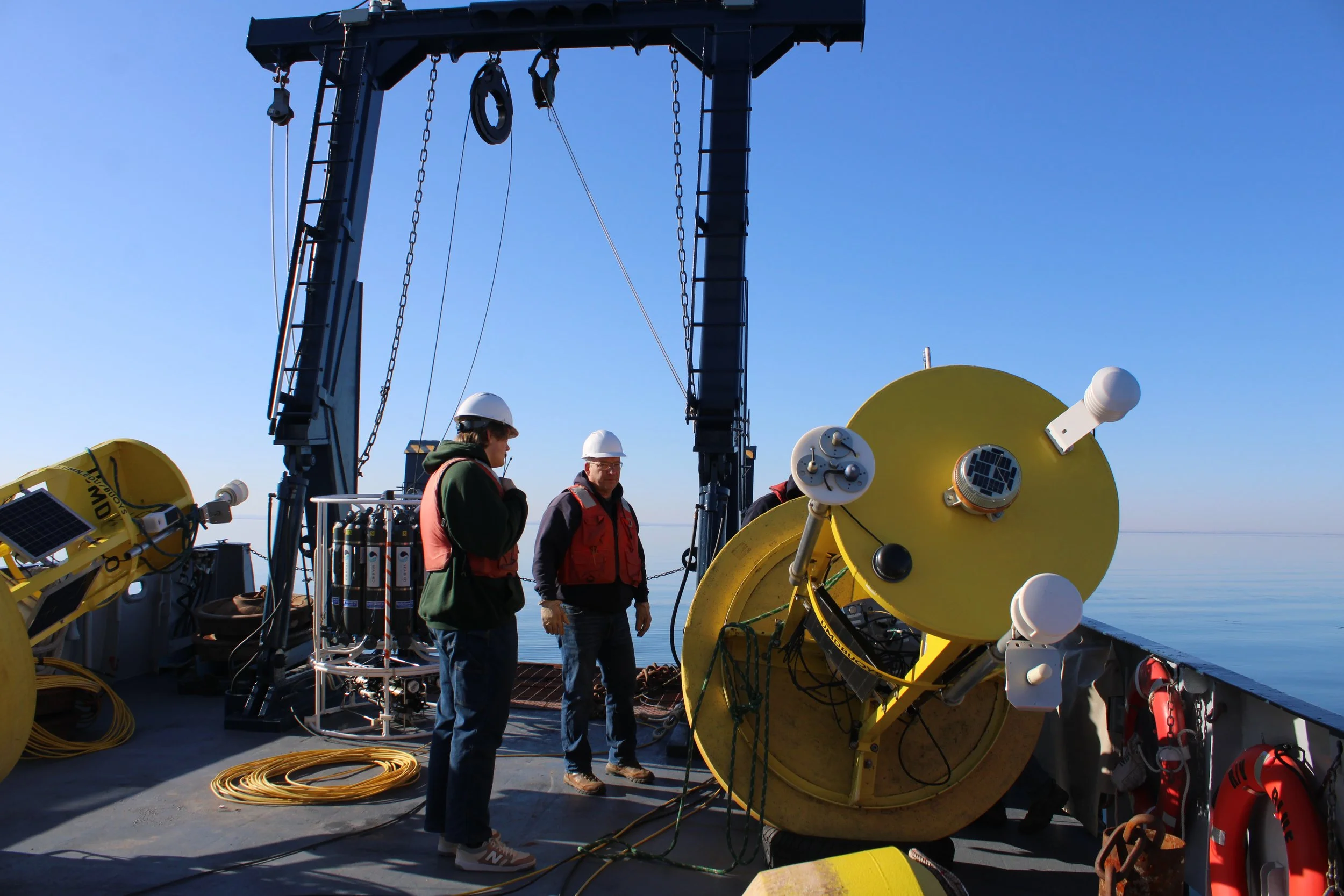
Marine Superintendent Doug Ricketts and an undergrad student preparing a buoy for deployment. Photo by Elise Lockner, April 21 2026
On Tuesday, April 21, the Large Lakes Observatory’s research vessel – the Blue Heron – embarked on a mission to deploy buoys in Lake Superior. The data collected through these buoys helps scientists, researchers and agencies get a clearer picture of what goes on in the lake, and make accurate weather predictions.
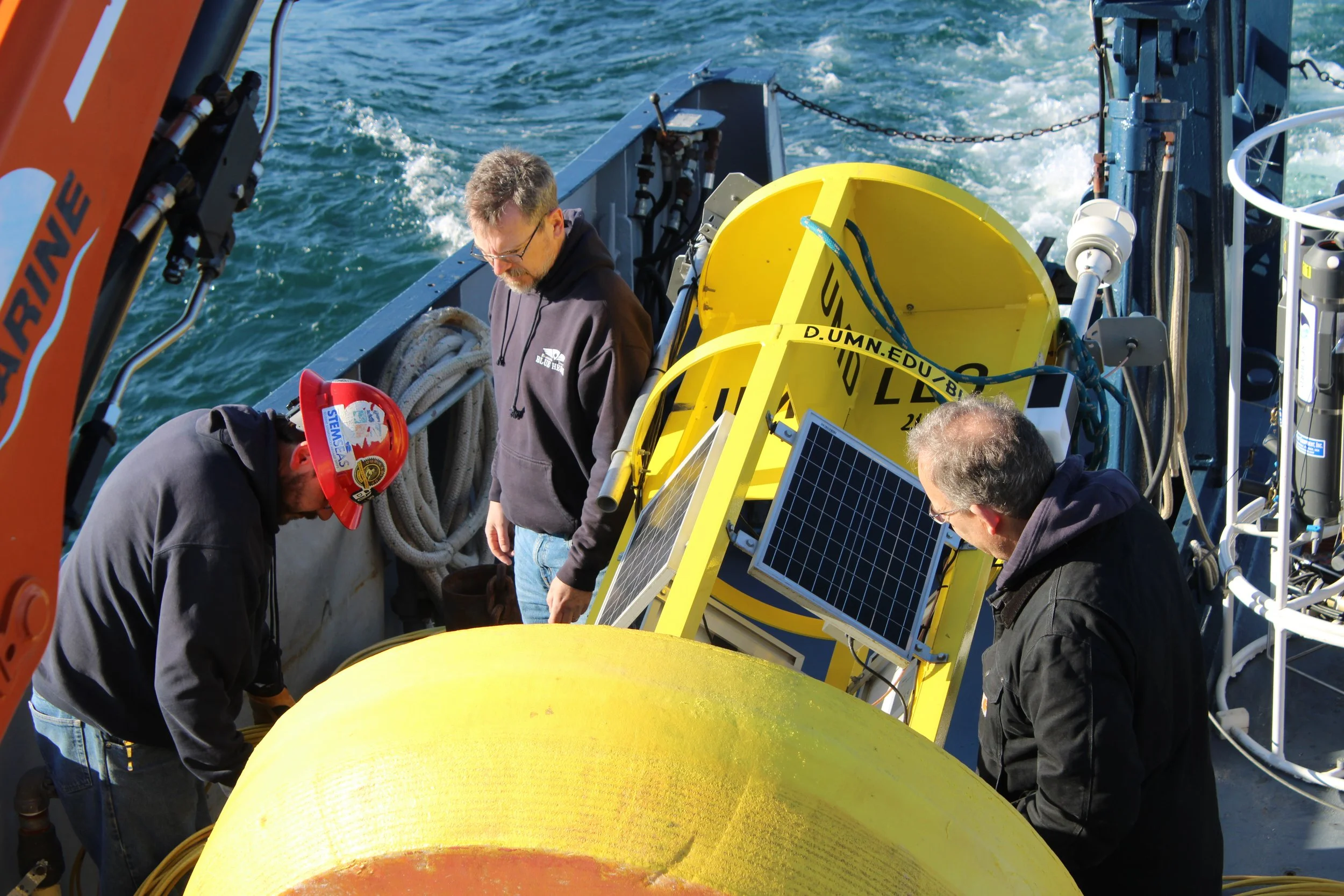
From left: Jason Agnich (Marine Technician), Jay Austin (Professor of Physics and Astronomy) and Doug Ricketts prepare a buoy to be dropped. Photo by Elise Lockner, April 21 2026.
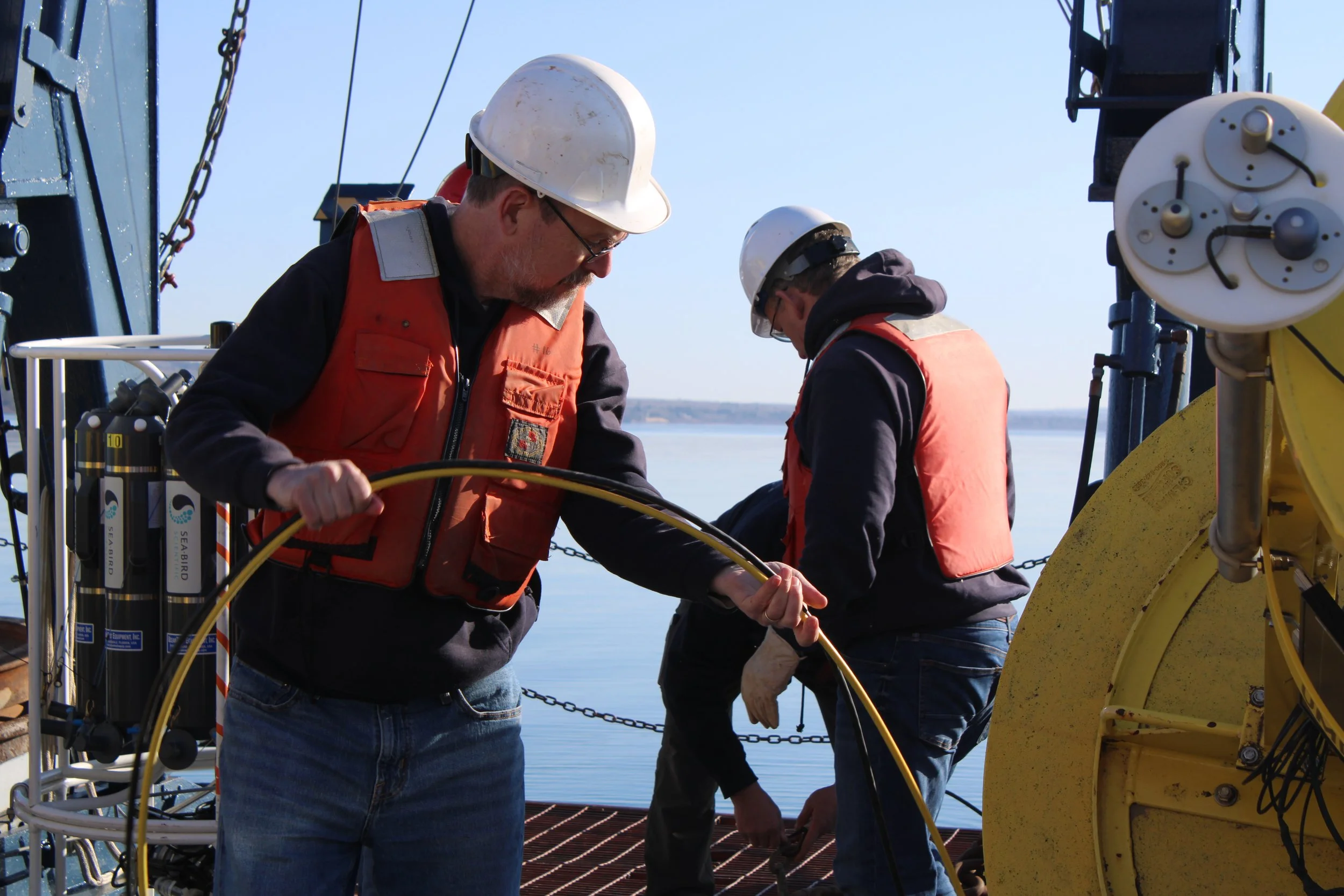
Jay Austin taking care of more preparations. Photo by Elise Lockner, April 21, 2026.
For this expedition, the Blue Heron deployed four buoys. Two larger ones were left near McQuade to collect a variety of data, including wind speed and direction, wave height, temperature, and humidity.
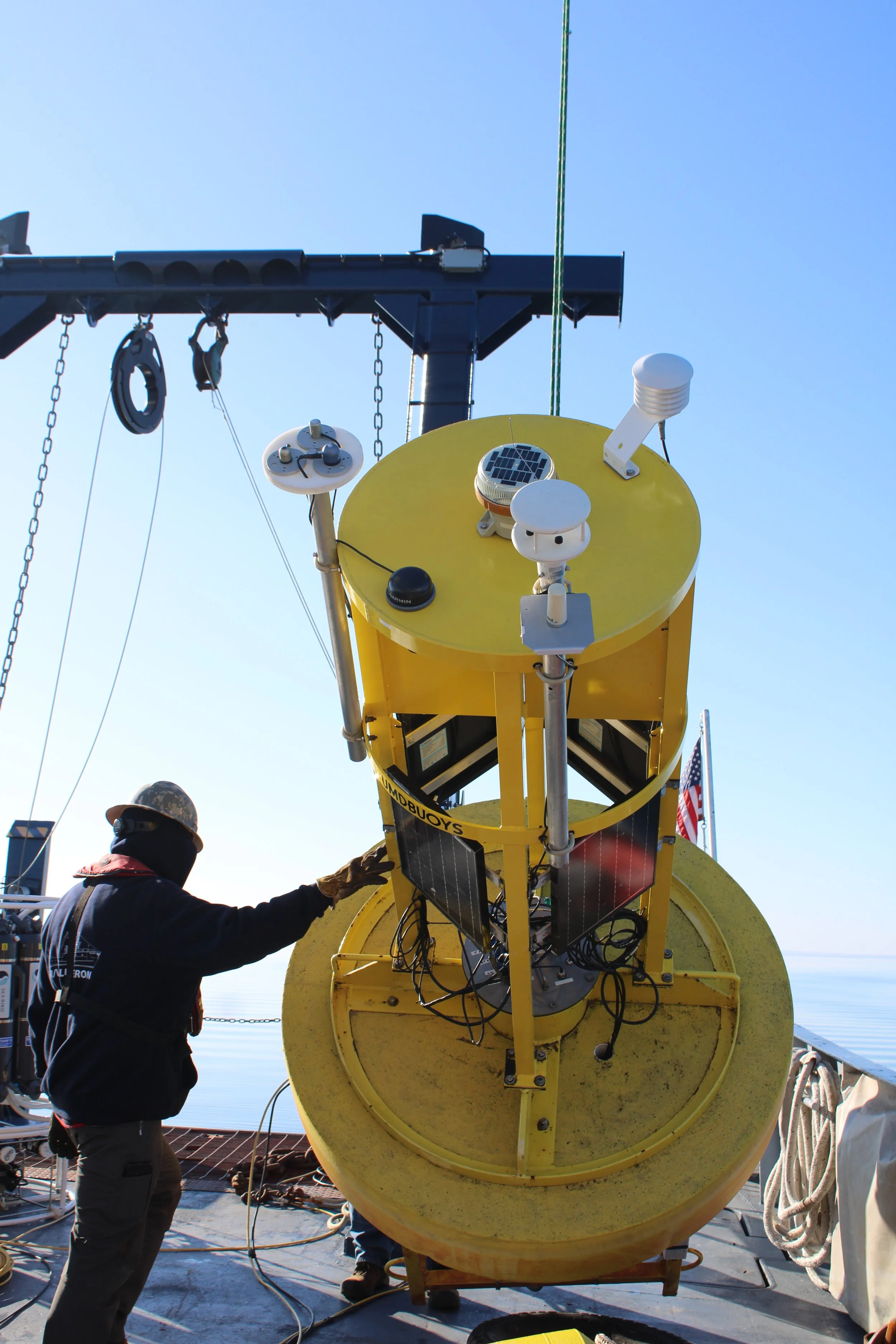
Engineer Tom Frantti watches as the first buoy is lifted into the water. Photo by Elise Lockner, April 21, 2026.
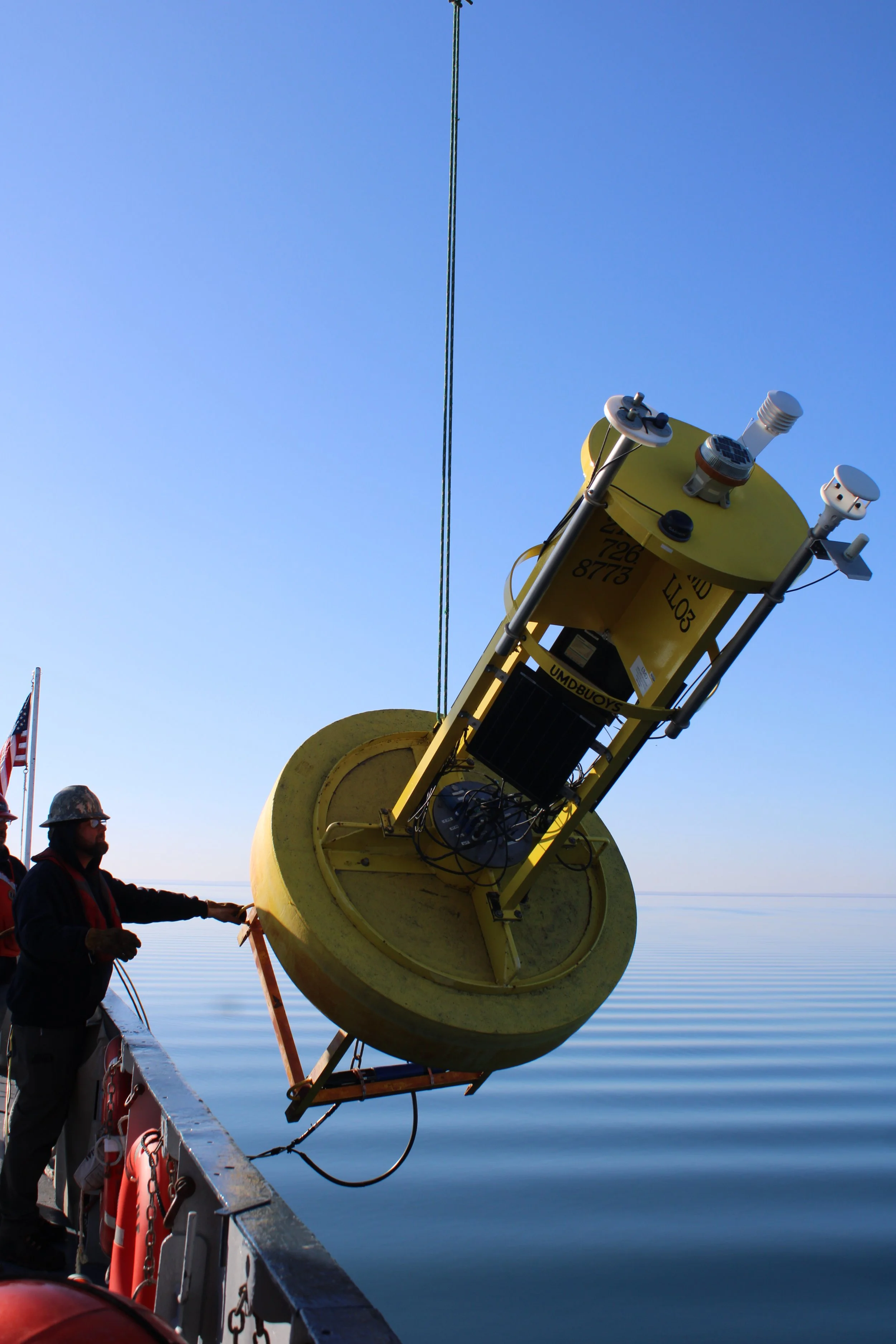
Can the caption go under both if they are side by side?
A crane attachment on the deck of the boat is used to lift the buoys safely into the water.
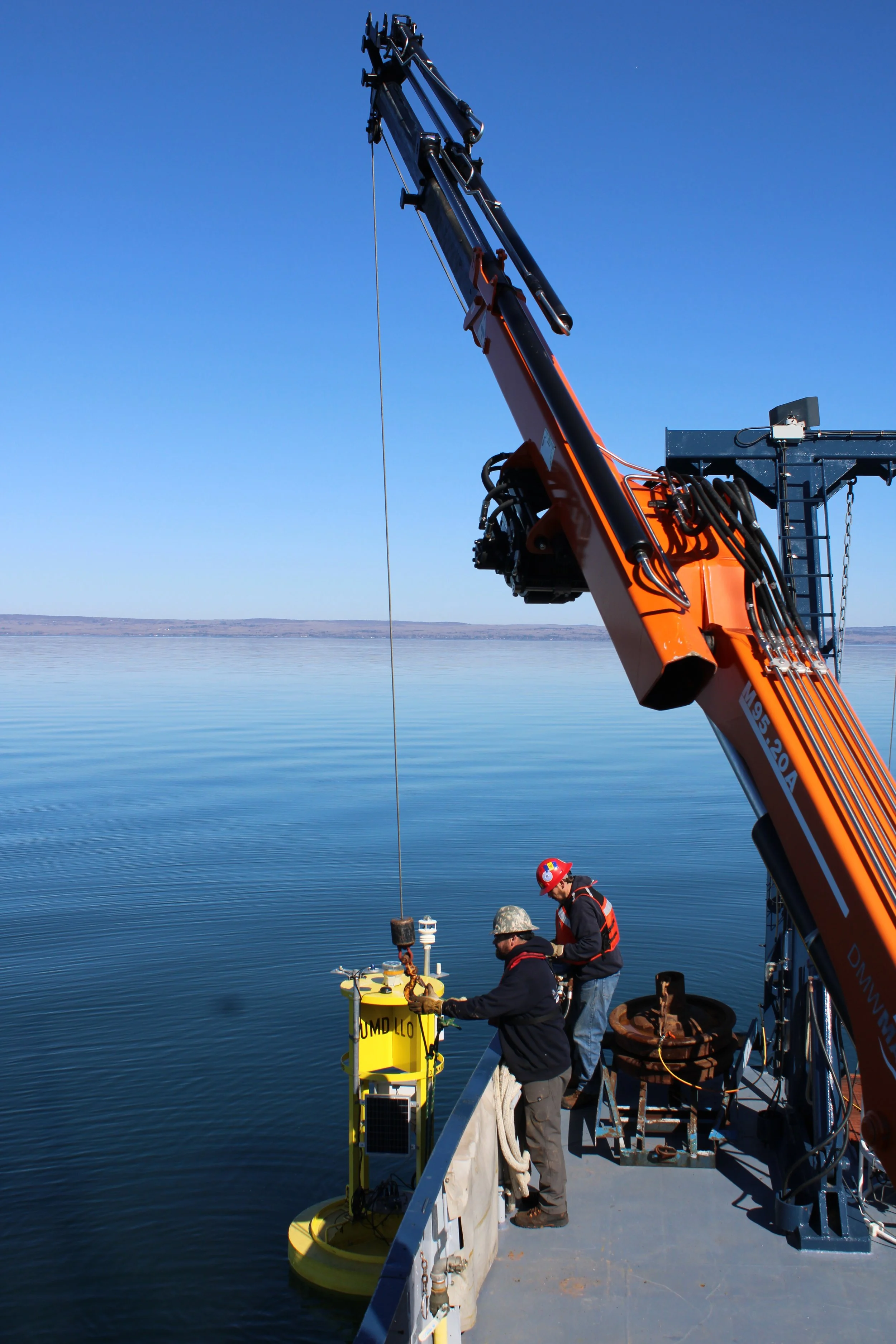
The crane placing the buoy in the water. Photo by Elise Lockner, April 21, 2026.
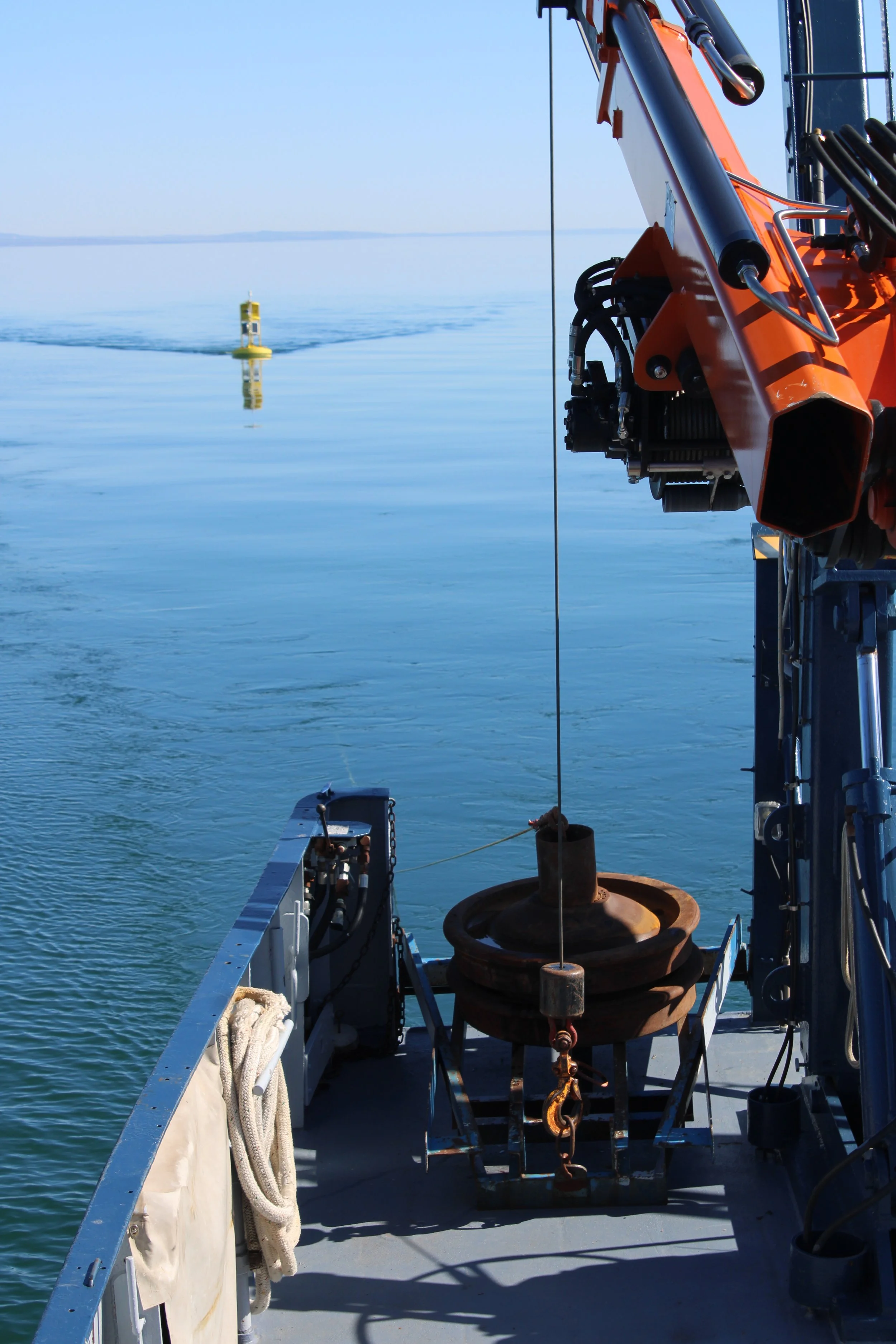
A buoy being dragged while its anchor (railroad wheels) waits to be dropped. Photo by Elise Lockner, April 21, 2026.
After being dropped into the water, the buoys remain attached to the vessel. This allows them to be dragged to a more precise location before dropping their anchors. Old railroad wheels were used to anchor the larger buoys, while buckets of concrete were used for the smaller buoys.
A smaller buoy was left just off Park Point to measure the wind. A fourth buoy – owned by Lake Superior National Estuarine Research Reserve (LSNERR) was deployed to collect data on water quality.
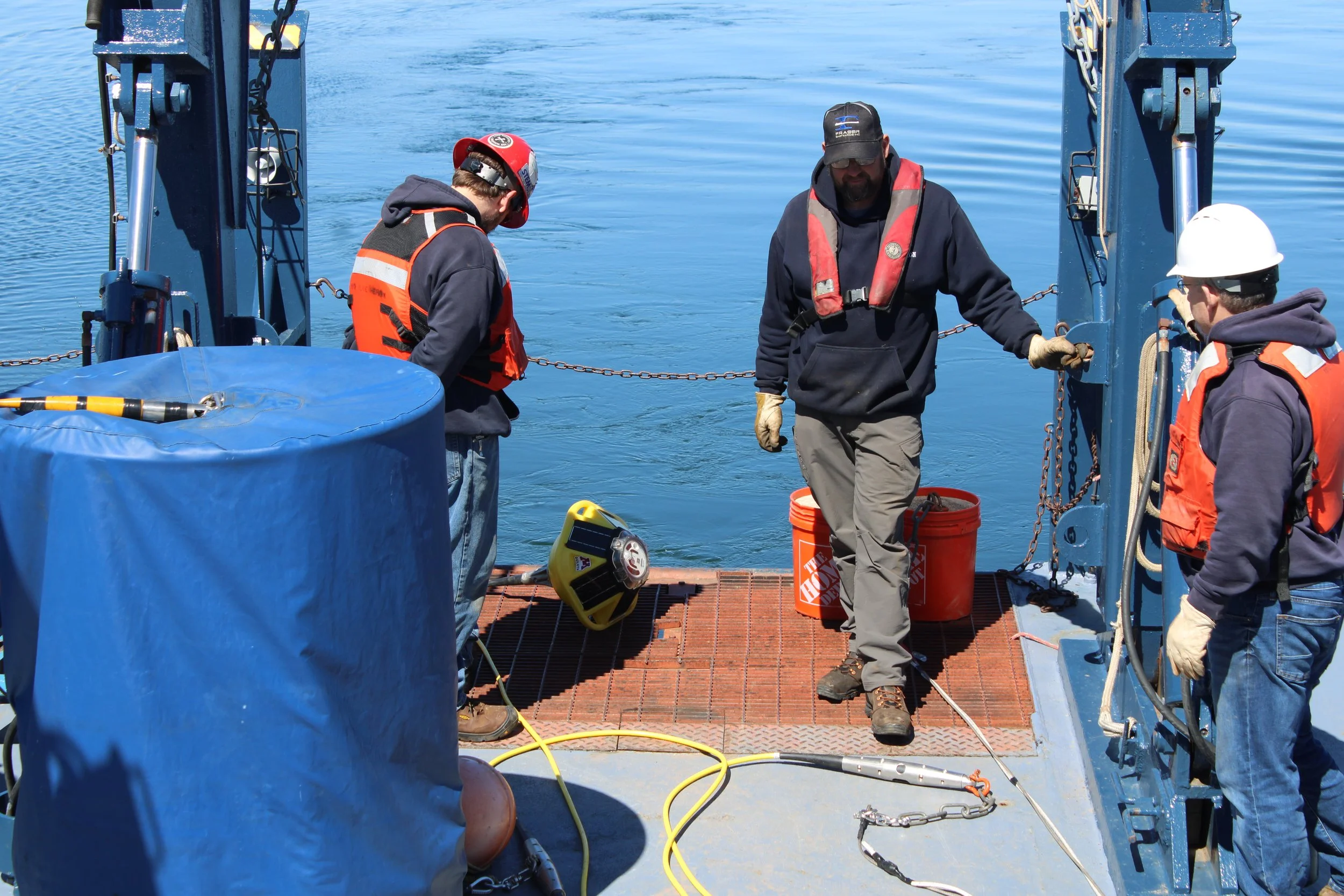
The little buoy is ready to monitor waves. Photo by Elise Lockner, April 21, 2026.
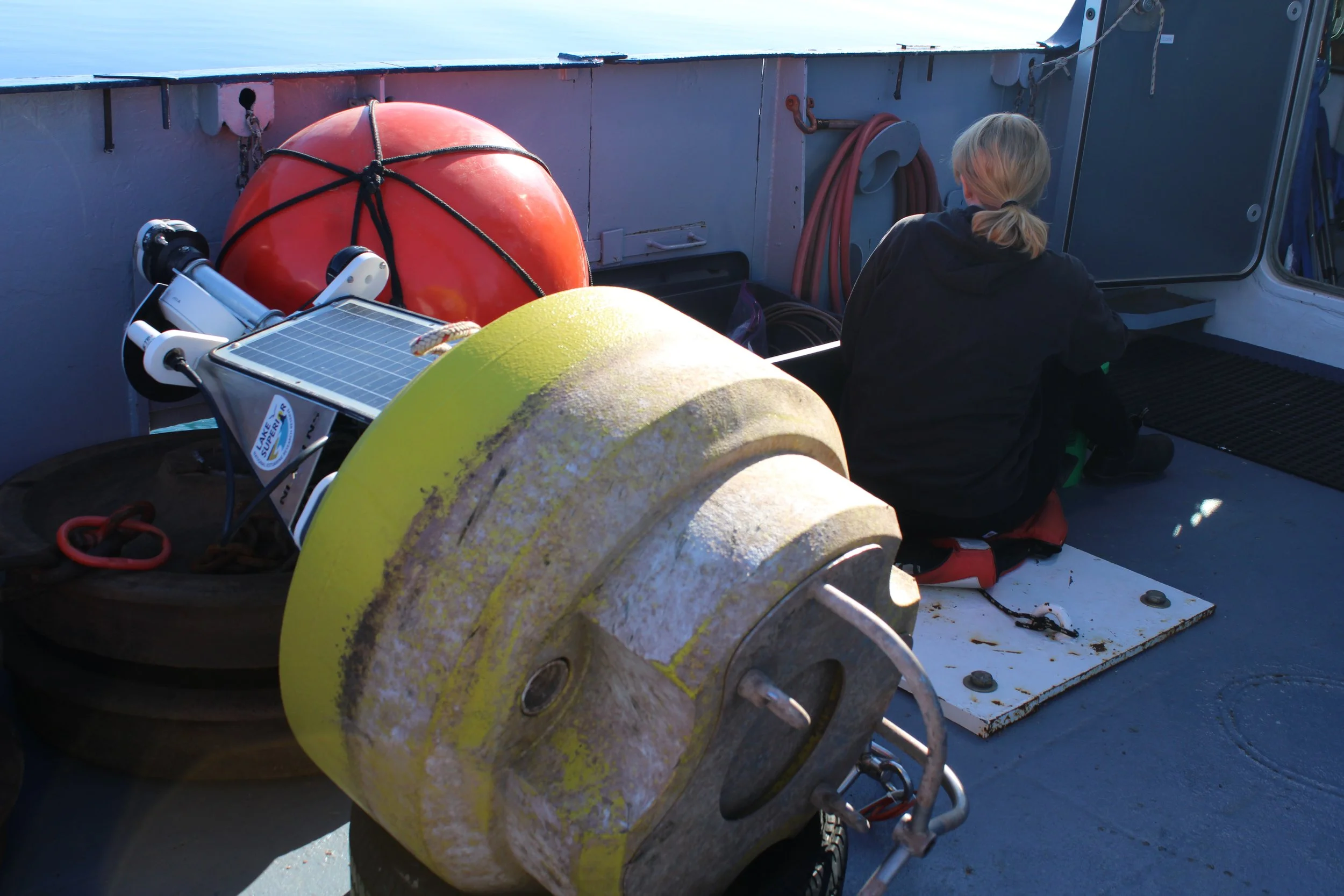
Addison Knoll, Water Quality Technician at LSNERR, works on the buoy. Photo by Elise Lockner, April 21 2026.
During the expedition, the Blue Heron was able to retrieve a winter mooring. This instrument is left underwater to collect data from October until the ice melts in the spring. When the time comes to collect the mooring, the boat returns to its coordinates and crew members use acoustic command signals as a way of remotely triggering the release of the instrument from its submarine hold. Once released, the mooring pops up to the surface, ready to be collected.
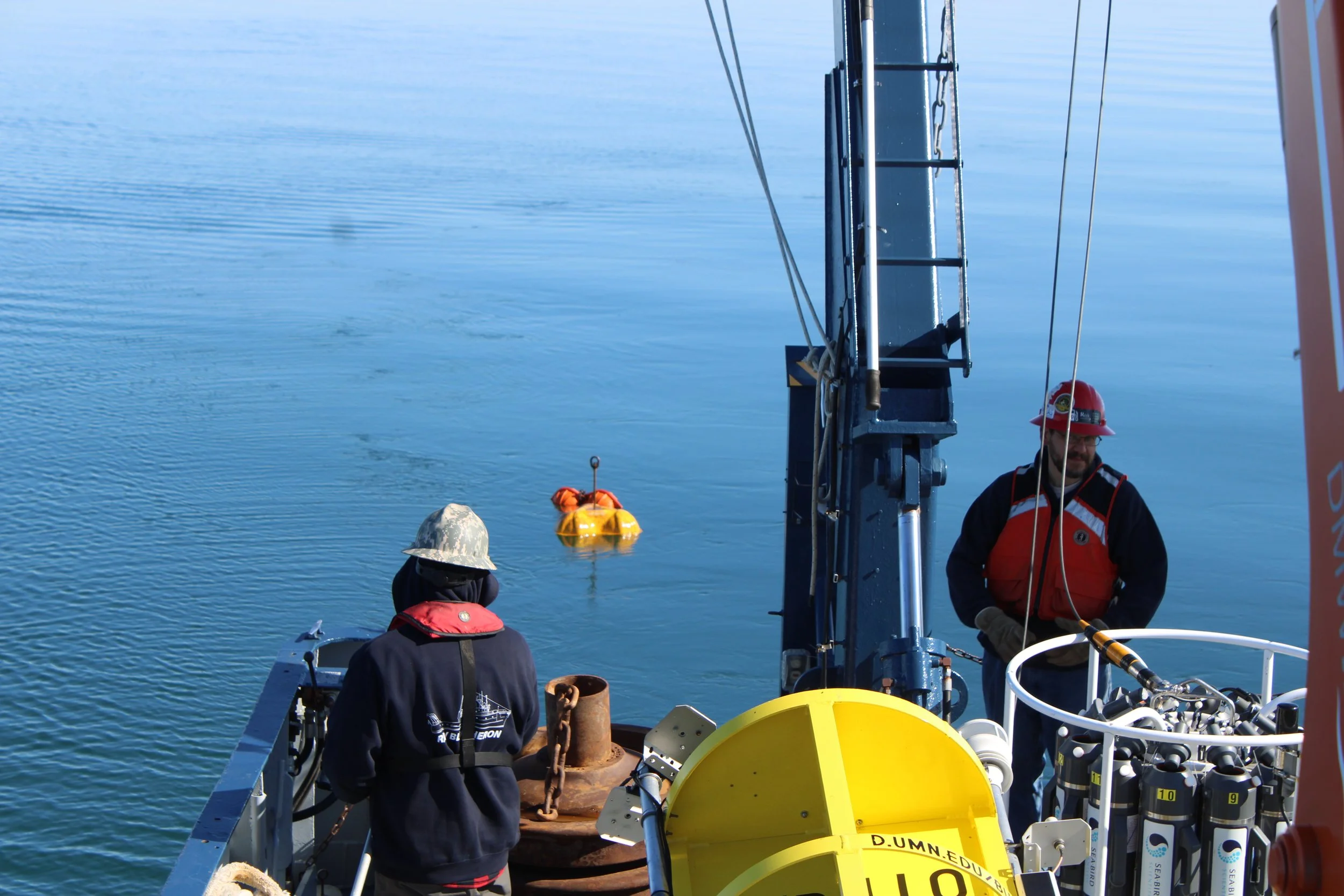
The winter mooring released to the surface to be collected. Photo by Elise Lockner, April 21, 2026.
Unlike the buoys that are able to send their data to the lab in real time, the winter mooring must be physically brought back and hooked up to computers in order to see its data.
The Large Lakes Observatory shares this data with many federal agencies, including the National Data Buoy Center and the Great Lakes Observing System. The data are publicly accessible on their websites. The LLO also provides public access to more of the data on its own website.
“The idea is that we want the public to be able to use this data,” explained Jay Austin, Professor of Physics and Astronomy at UMD, “we want people to be interested in what we do.”
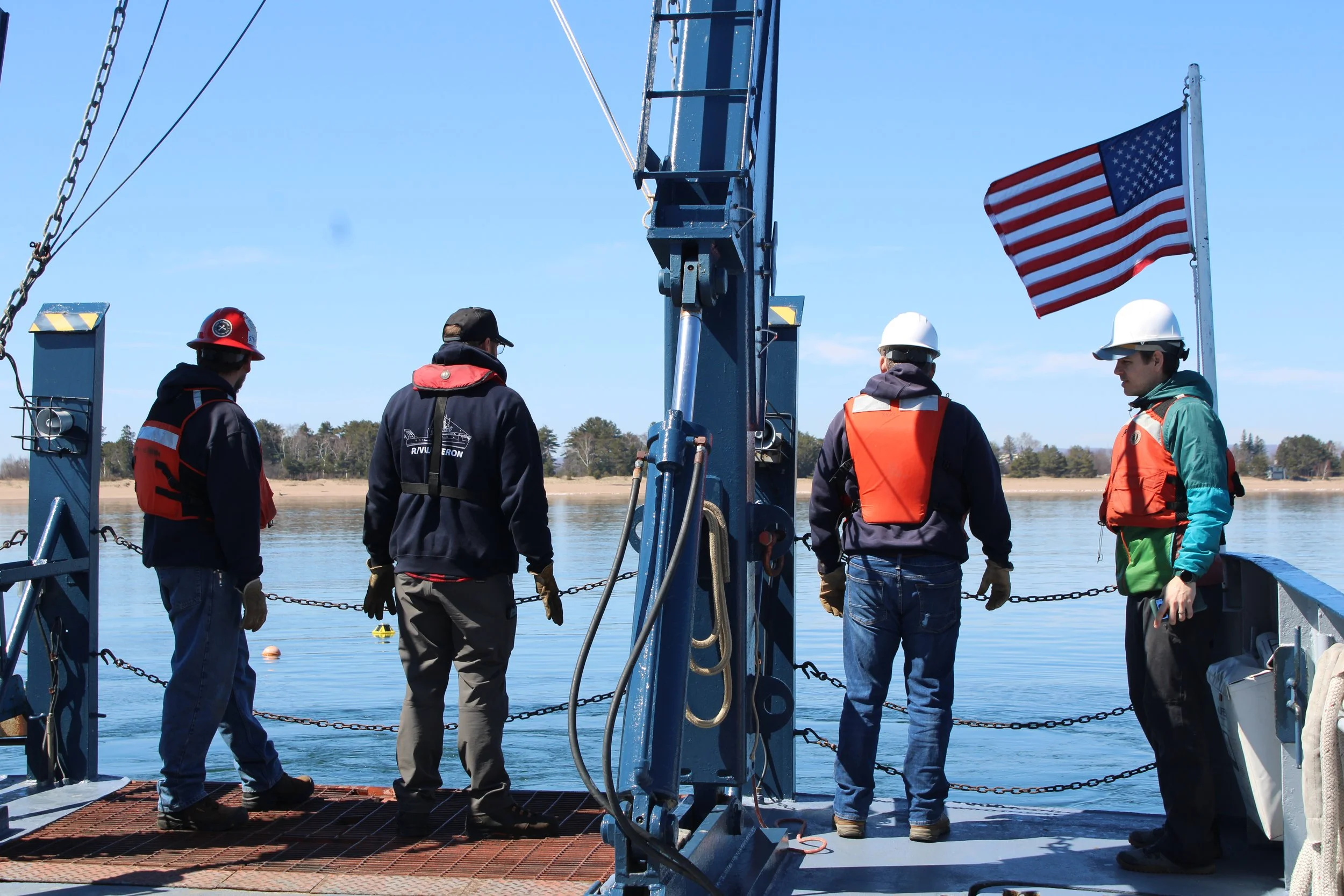
From left: Jason Agnich, Tom Frantti, Doug Ricketts and Craig Hill (Associate Professor of Mechanical and Industrial Engineering) watching a buoy from the back of the boat. Photo by Elise Lockner, April 21, 2026.