Iron Gall Ink Demo: How Students Learned to Make Ink from the Middle Ages
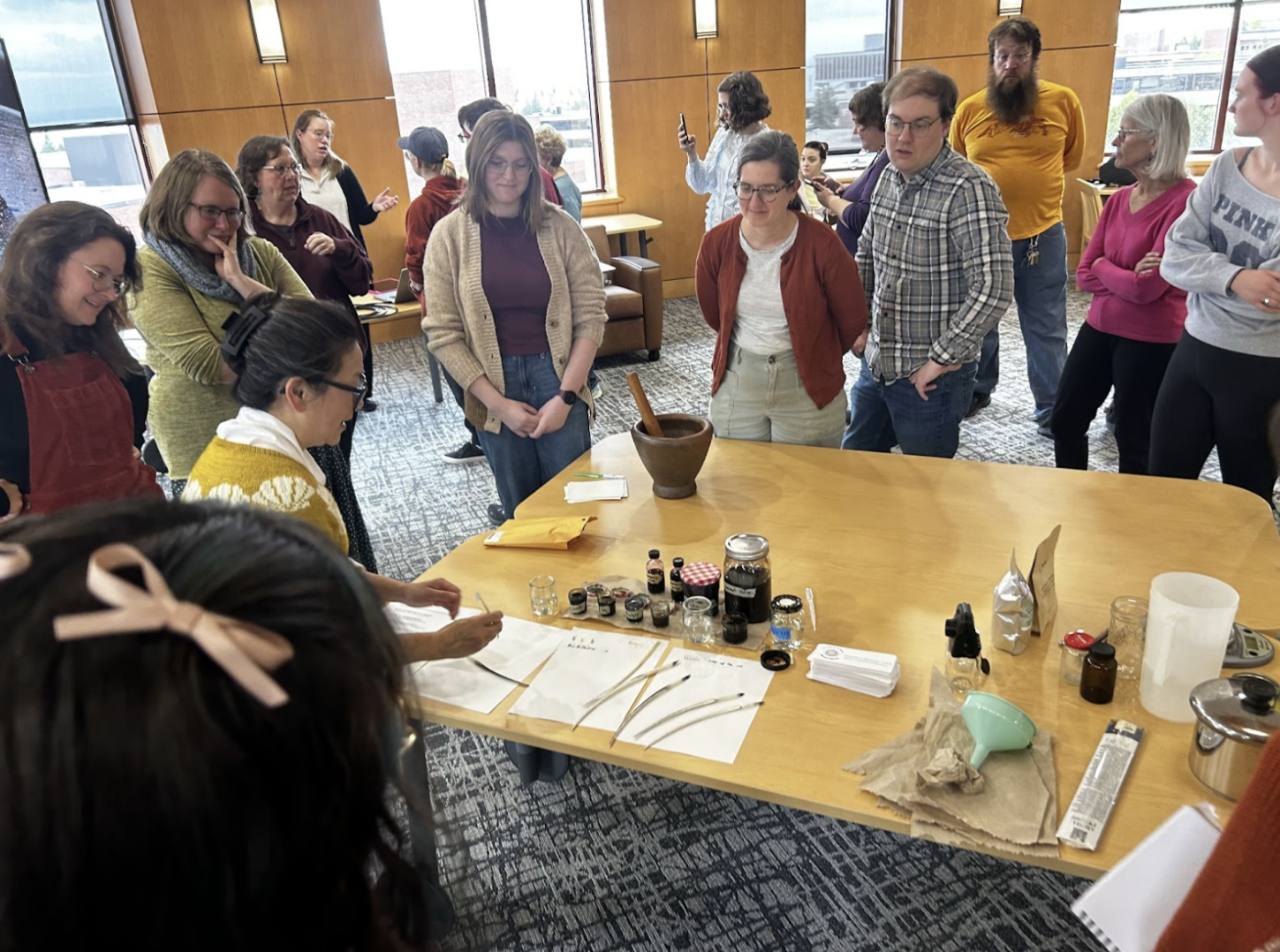
Krista Twu demonstrates writing with iron gall ink. Photo by Jonah Schmieg
UMD students, professors, and community members gathered on Friday, Oct 17, for an interactive presentation on iron gall ink making. The demonstration was directed by Dr. Liz Hebbard, a Professor of French and Medieval Studies and Paliographer at Indiana University.
During the event, community members got to crush up iron galls or oak galls, which are tree growths caused by a variety of parasitic wasps, using a mortar and pestle. “It takes a community to make a book.” Dr. Hebbard said. Crushing iron galls is just one step in the process of making ink; the ink must be mixed with iron sulfate and water, then oxidized. “The best parchment inks come from the oak gall.” Dr. Hebbard said.
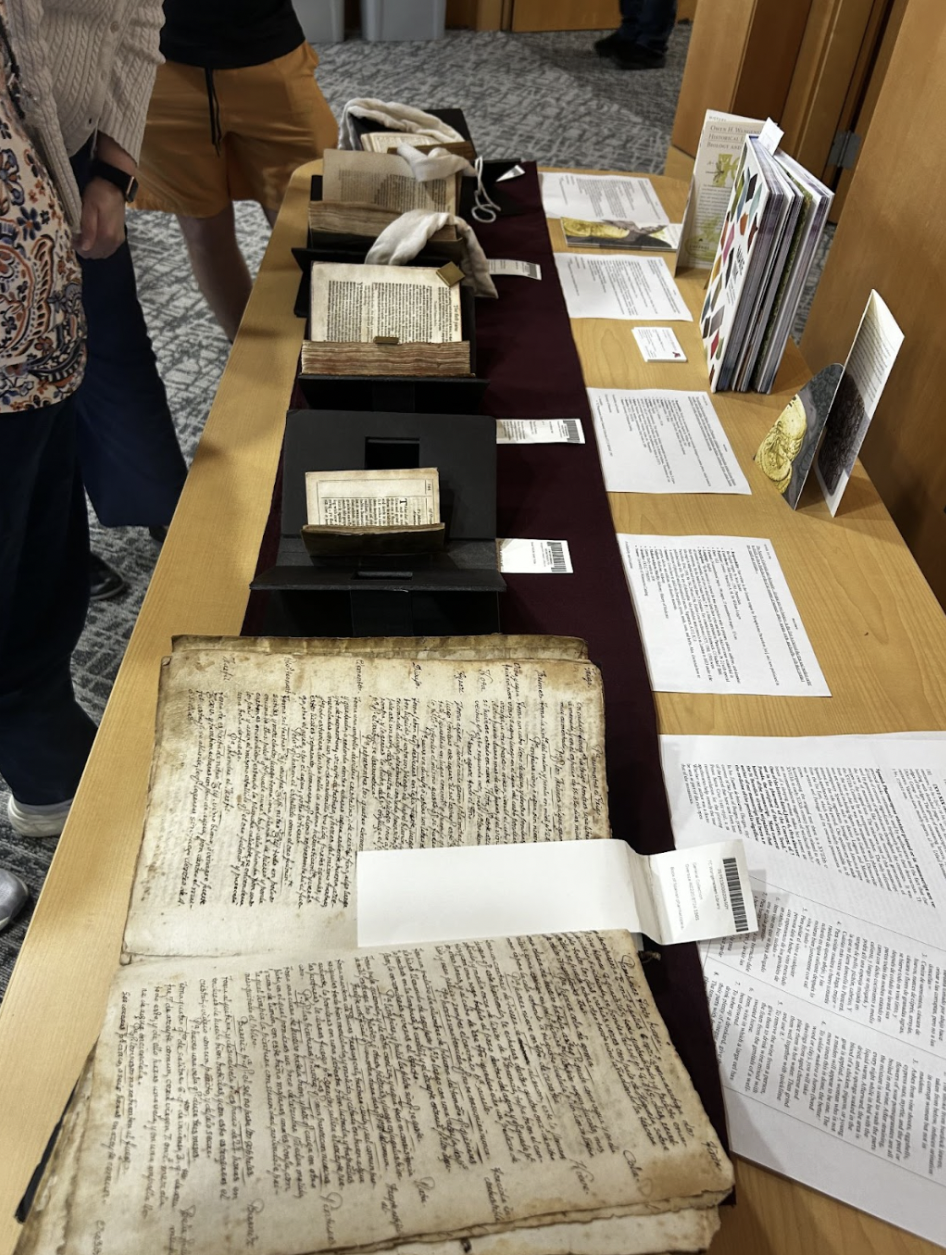
Manuscript layout from the 15th and 16th centuries. Photo by Jonah Schmieg
“I learned about the different chemicals and compounds.” explained Paige Russell, a junior at UMD. “There's a lot more that goes into it than I thought.” The demo also featured several interactive displays showcasing different types of galls, as well as stations where students could write with quills using various natural inks. Manuscripts from the 15th and 16th centuries were provided for students to read and handle.
Iron gall processing is just one step in the process of creating The Book of the North. The project involves many volunteers, students, and professors alike, collecting materials for the project. “Manuscript production represents an enormous global network,” said Dr. Hebbard.
The event was a collaboration between Hebbard and The Book of the North project, developed by UMD Professor and Paliographer Krista Twu. The project aims to create a book entirely made from natural materials, just as would have been done during the Middle Ages. The goal of The Book of the North Project is to “ask questions about the Middle Ages and the way they were interacting with the ecology,” said Krista Twu.
The Book of the North project is a collaborative effort between UMD staff, friends of Twu, and several UMD students. The oak galls demonstrated at the event will eventually be used for the book’s calligraphy. “The book tells us about the people who made it but also the people they made it for,” Said Twu. “After all, a book is a community.”
Pages of the book are planned to be displayed at The Tweed Museum of Art on campus, in January or February of 2027. The book will contain around 100 sheets of paper, equaling around 400 sides of paper when the book is bound.
Twu has lots of plans for the future after The Book of the North is complete, including a project to construct a 15th-century Gutenberg-style printing press. This project is still in the brainstorming phase, but Twu hopes that the project will focus on the change from manuscript to script culture.
More information about The Book of the North can be found at bookofthenorth.carrd.co. As well as Indiana University’s book lab at https://booklab.indiana.edu/.