The Techno Club Strikes Again
This article was originally published in the November 2025 print edition of The Bark, distributed at the University of Minnesota Duluth campus.
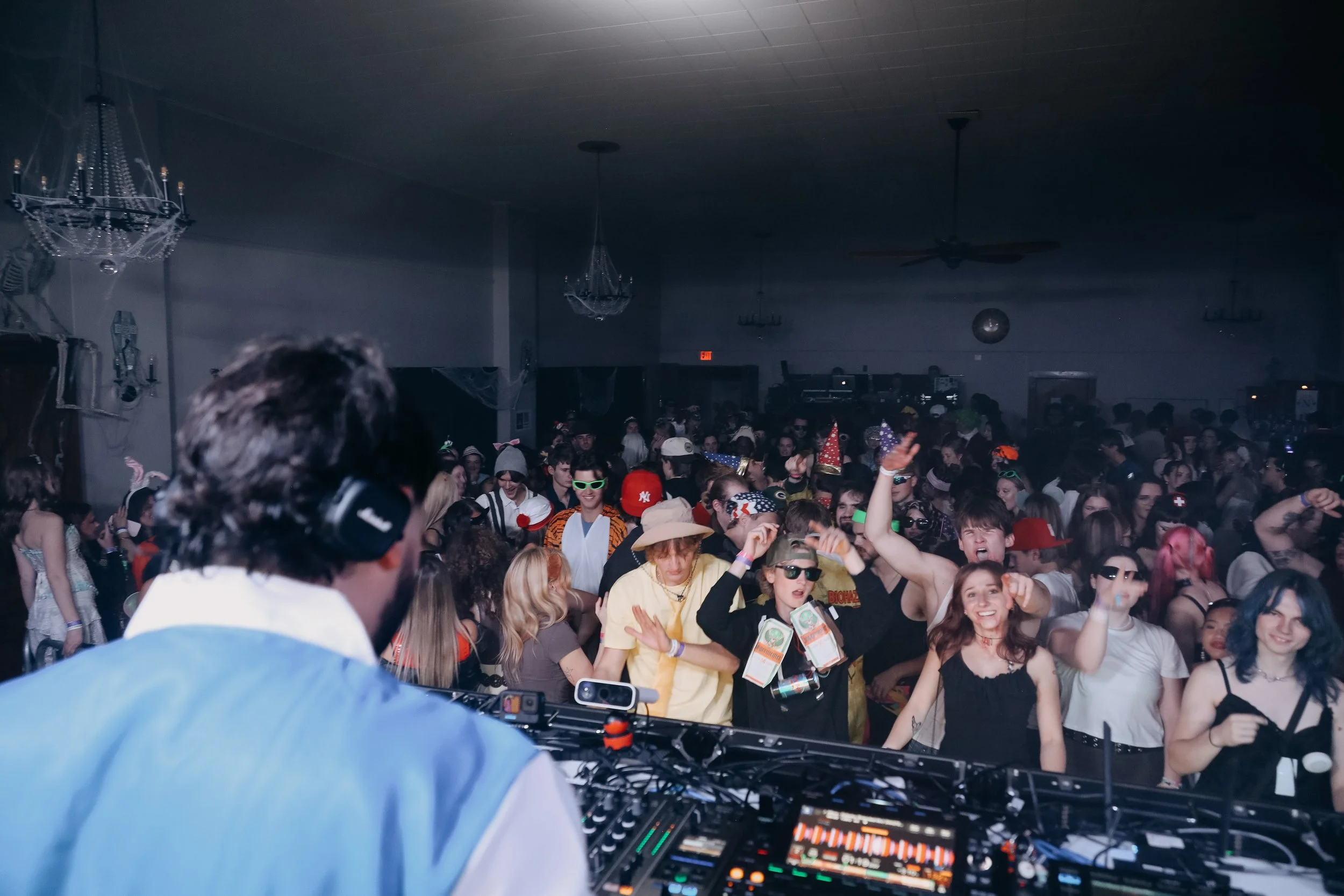
The crowd at this years Haunted Harbor event came dressed in their Halloween best. Photo by Ty Garrett
At this point, there is no doubt that most UMD students have heard about the Techno Club. The student-run group has been busy this year and continues to grow, with over 700 people attending their Halloween rave event last month, ‘Haunted Harbor’.
UMD’s Techno Club was founded in early 2024 by Reece Wickland, Chayton Borman and Aedan O'Neill, who have since graduated from UMD. Wickland and Borman are now graduate students in UMD’s Applied Materials Science program.
Wickland stated, “We didn’t know anything about EDM, Electronic Dance Music, culture or how to plan or operate these events. We just knew we wanted to create an EDM culture that was true to the roots of techno yet modern enough to scrub the dreadful stereotypes that come with club culture,” Wickland said.
Roots of rave
The real meaning of a techno rave stems from the 1990’s clubbing culture. These raves were underground and invite only; a way of life for those who were not accepted into the mainstream world. People who were deemed ‘outcasts of society’ — people of color and people of the LGBTQ+ community — originated rave culture. These places were accepting of all because the founders didn't feel safe or accepted at commercialized spaces, such as bars or nightclubs.
As these parties were literally and figuratively ‘underground’, the drinking and drug habits emerged. Wickland notes, “These parties were often drug filled parties that went until late at night. But then as they became more popular, then more and more people hopped onto the train.”
As raving has become more and more popular, the true roots of rave culture has developed into more of a commercialized venue.
Wickland then poses the question: At what point does the copy become more original than the original?
When the term “rave” is mentioned it is customary to think of the 80’s, but the club’s goal is to stray from these stereotypes and make a way of partying safe for all those in attendance.
To start out the group’s first practices, Wickland, Borman, and O'Neill started their DJing in Bohannan 90, from a Walmart DJ board. Once they were confident, they started hosting events.
The first event the techno club hosted was in April of 2024. “That was our first rave, if you can call it that. It was just us playing techno music at the flame,” Wickland said.
“From April to October 2024, we were planning the Halloween rave. We went to the DECC six times asking them, ‘Hey, what does it take to have an event here? What is everything that we need to know?’,” Wickland continued.
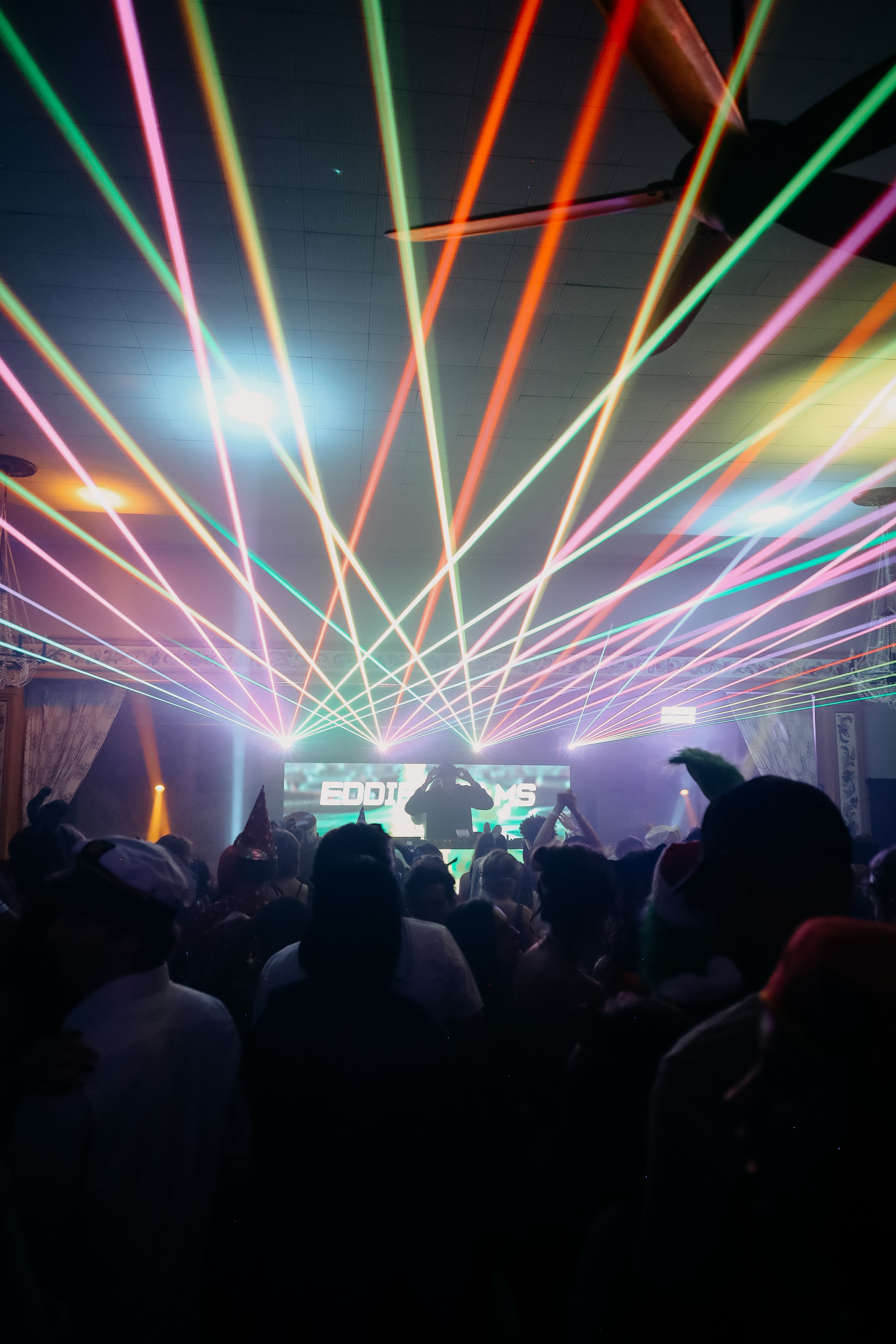
Eddie Adams performs on the main stage at the techno Club’s Haunted Harbor Halloween Rave. Photo by Ty Garrett
A caring crew
Behind the flashy lights and loud music are a group of 20 DJs and 30 other behind-the-scenes workers who participate for the love of the game. Over time, the club realized that they were coming out ahead financially, but not by how much you may think. From February to September of 2024, the group only made $2,400. This is a large amount of money, but with most events costing well over $15,000-$20,000, the profit is about 15% or less.
“All of our events are not really about the profit. It's more about the experience that we provide,” Wickland commented.
With their minimal profits from each night’s event, the group puts almost everything back into the club, to make each party better than the last. Not only are the club members working on making the production better, they are also working on making the atmosphere more appealing and safer.
“What's going to make [our party] memorable to someone? You know, how are people going to feel safe there?” Wickland stated.
To answer these questions, they feature multiple different DJs performing in one night. Another way to make their parties memorable is by having themed nights, which they plan on having more of later in the school year. One way they make their parties safe is by hiring security to ensure everyone is being safe.
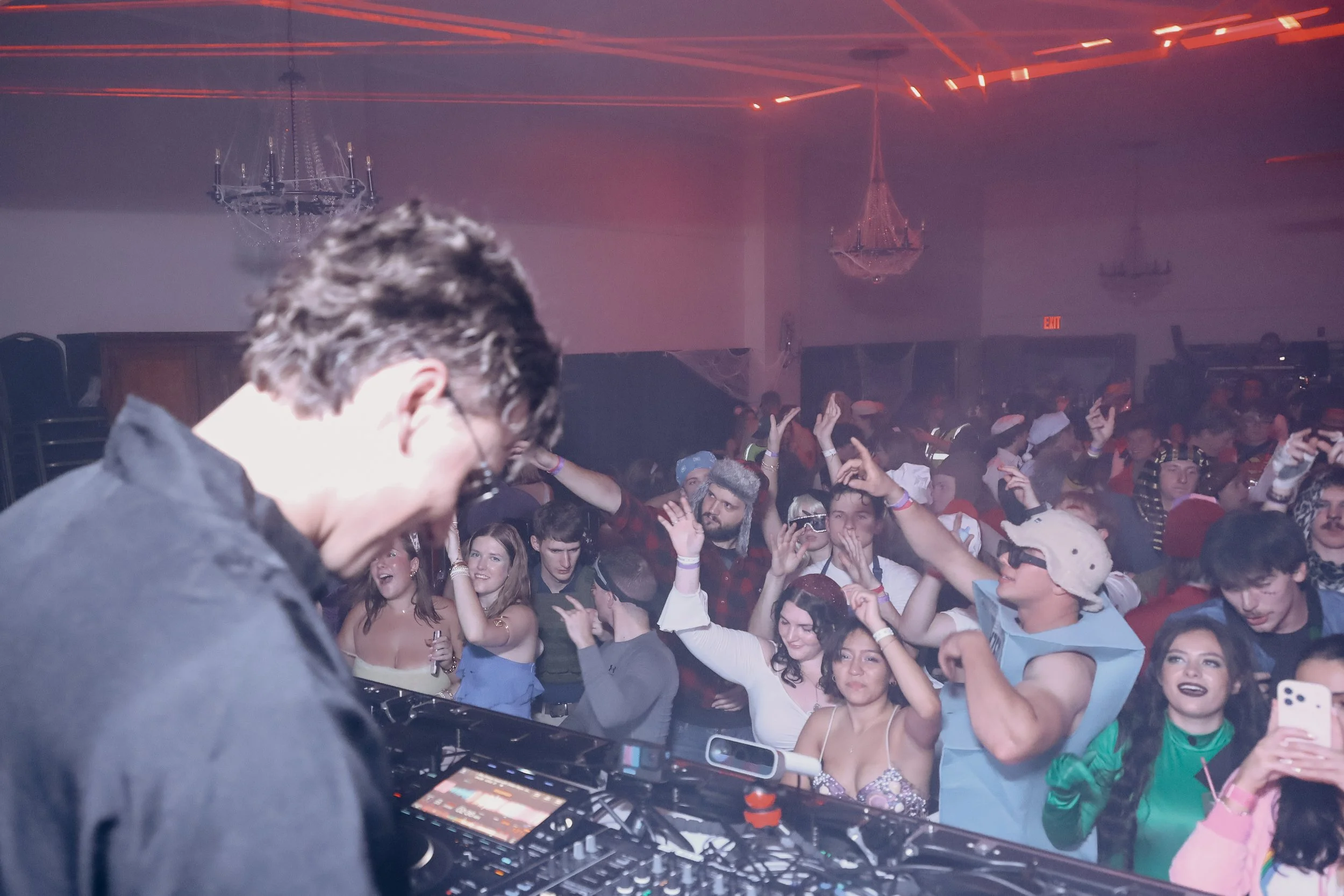
Over 700 people attended the UMD Techno Club Haunted Harbor 2 on Oct. 31. Photo by Ty Garrett
Locations
After the Halloween rave last year, the group exploded in size, popularity and demand. Since then, they have been playing at different venues almost every weekend. In the Duluth area they have played at Jade Fountain, The Flame Nightclub Duluth, Vista Fleet on the lake and other nightclubs and bars. While hosting and promoting the raves, the Techo group has collaborated with numerous artists from all over Minnesota, along with artists from other states including New York.
UMD’s Techno Club not only plays here in Duluth, but also is able to play and perform in the Twin Cities.
The partying didn’t stop over the summer. UMD’s Techno Club was able to perform at Breakaway Music Festival in St. Paul in June where attendance was about 25,000.
Club culture
Knowing the audience and its preferences is key when hosting a rave. In the true rave form, the night begins with semi-slower EDM techno music. Towards the early hours of the morning, before the night is done, the music becomes faster and louder.
Just like in the “big-leagues” of raves, some of the events hosted by the Techno Club are 18+ in age, while others are 21+, the latter being simpler to host.
“21+ events are way easier for us to handle because if we know everyone there is of age then there can be a bar there and we don’t need to worry about it,” Wickland explained.
Even though throwing 18+ parties can be more of a hassle, the group still loves to host them.
“We like to throw these events for the 18+ crowd because we understand that there's not a lot of spaces other than house parties to go hang out at,” Wickland comments.
In a complete change of direction of typical rave culture, UMD’s Techno Club is aiming to provide parties that are completely sober where no alcohol would be sold. The Techno Club sees sober raving as gaining in popularity.
Explained by club co-founder Chayton Borman, “we're trying to get away from the alcohol centered spaces because not every rave needs to have a bar. You know, we don't need alcohol, we don't need substances to make these things fun.”
UMD’s Techno Club’s main goal is to provide a way of fun partying while in a safe environment. Wickland states, “We are creating a grassroots community devoted to doing things the right way and paying homage to the ravers who laid the foundation for the culture years ago.”