
Who is the Chancellor?
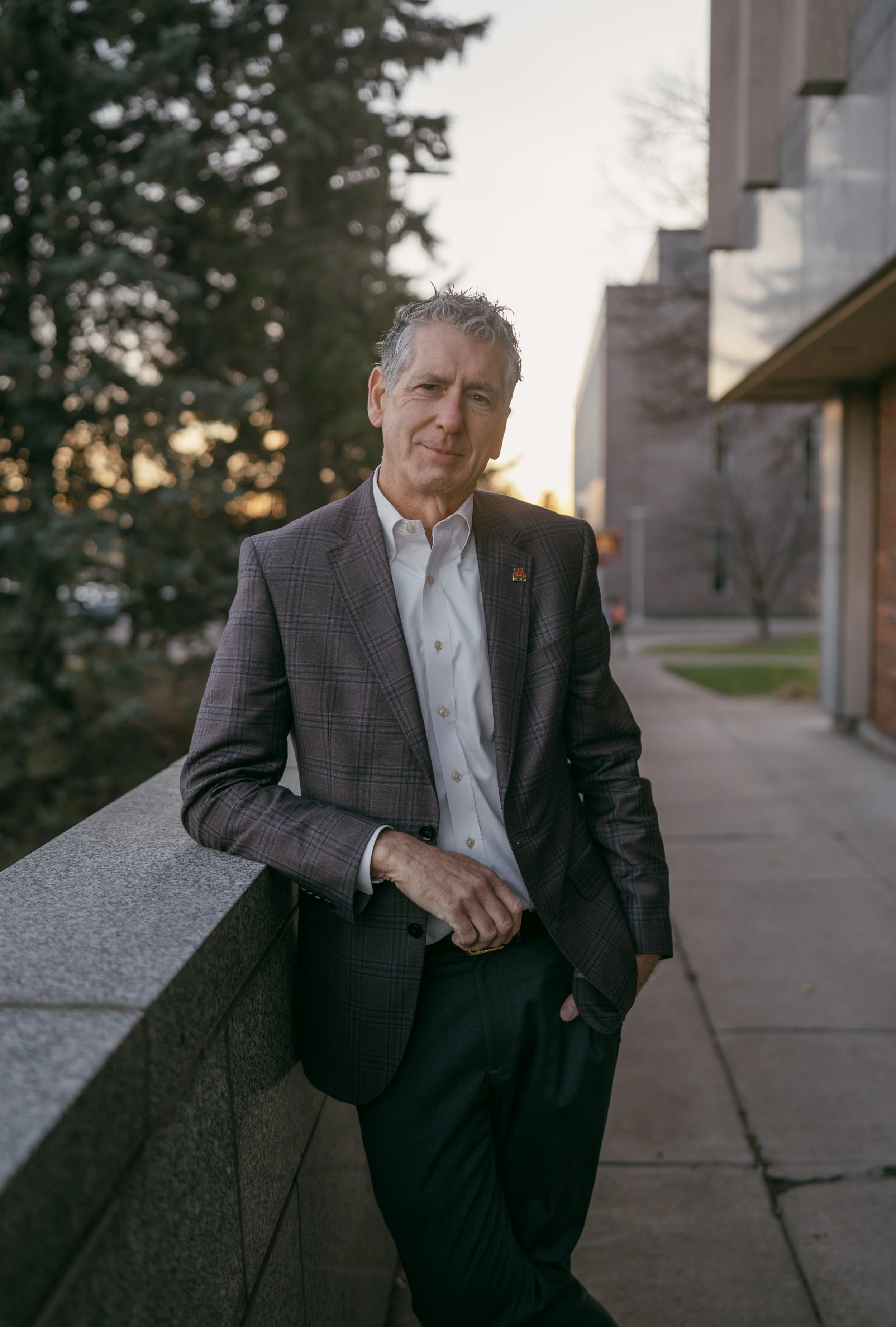
Chancellor Charles Nies Photo by. University of Minnesota Duluth
As University of Minnesota Duluth Chancellor Charles Nies starts his third year here, he shared some insights with The Bark about his daily workload, what’s happened in his time here, and some things to look forward to. Let’s dive in.
Chancellor Nies grew up in Minnesota and went to college as a first-generation college student. As such, he didn’t know the career paths available within a university, but he worked on campus to help pay for his education. That experience eventually led him to the realization that he could work in the university system. But first, various jobs and internships during his education created opportunities and experience where he learned, including some things that he didn’t want to do.
“I’m so glad there are people that can do that kind of work; it just wasn’t what I’m wired to do,” Nies said. The Chancellor also took advantage of academic and co-curricular activities throughout undergrad.
Most recently, Nies came to Minnesota to become UMD’s Chancellor after 18 years working in California’s higher education. He said, “Since starting in Duluth, it's the first time in probably twenty-five years that I haven’t been in the classroom.” Teaching students is an environment where Nies thrives, where learning goes both directions. “I love to teach, love to be in the classroom, so I miss that,” the Chancellor stated.
Though he’s not teaching classes here, Nies still gets involved with the student body. In September, he hosted “Chancellor in the Wild” events highlighting lesser-known locations around campus, encouraging students to explore and perhaps discover a new favorite location on campus. He also keeps a packed schedule, attending “wonderful events” around Duluth in addition to other Chancellor duties.
All of the events, meetings, and emails add up to a long day: just twelve hours if the Chancellor is lucky. Instead of a 9-5, this Chancellor wakes at 5am, sometimes working until 9pm, saying “I try and get off the computer by 9 o’clock in the evening,” continuing “[when] I’m in meetings and going to events and activities, it doesn’t mean the email stops.”
Some of those six to eight daily meetings are with other campus senior leadership, where he connects and checks in. Other meetings are with colleagues across the university system. The chancellor also reads, keeping up with his scholarship, as well as current news and issues going on in higher education. Though he doesn’t have a lot of free time, one of his favorite activities includes showing off Duluth to others.
One of his favorite spots on campus is on the third and fourth floors of Maloski Stadium. The view—of campus, the hill, and the lake—“is just phenomenal.” He also likes the view of the sunrise over Lake Superior during morning beach walks with his dog, year-round. His schedule, he says, is “never routine. Just—exciting.”
Part of the work when he first arrived consisted of recentering the university and articulating its identity. Nies noted he thought everyone kind of knew what it was, but didn’t articulate it: “we are this student-centered research university that’s committed to curiosity and discovery and building connections and a strong sense of community that helps people feel like they matter, they belong,” the Chancellor said. Along with that, curiosity, connection, and compassion were other values the Chancellor sees on campus.
Since coming to Duluth, "Conversations and efforts… have been moved forward in ways that I’m not sure people expected,” the Chancellor said, with work both here in Duluth and across the whole university system moving quickly. His work spreads across all five system campuses: Crookston, Duluth, Morris, Rochester, and Twin Cities. Each of the five campuses is unique in the sense that they differ in their focuses and have “distinctive identities,” as the chancellor called them.
Nies has worked with the other campus administrations to pull together their mutual threads, including a new common calendar for the first time in the history of the University of Minnesota. Such a calendar will allow both faculty and students more freedom to work and learn at other campuses. The University of Minnesota Alumni group also expanded to include all five campuses, which the chancellor noted was a positive change and a good potential networking opportunity.
“We’re all wearing maroon and gold,” he said, encouraging alumni from the system to participate in events at a campus near them, also noting that 70 percent of alumni stay in Minnesota.
Overall, the Chancellor feels great about the conversions that have happened in his time here. “At the end of the day, if the University of Minnesota Duluth identifies itself as a student-centered research university, that means that we are constantly asking our questions and making our decisions on what is best for the student experience.” That means learning from the undergraduate scholars at UMD. “I get an opportunity to share these amazing stories of the work that’s being done here, and that’s really rewarding and I feel honored to be able to do it.”
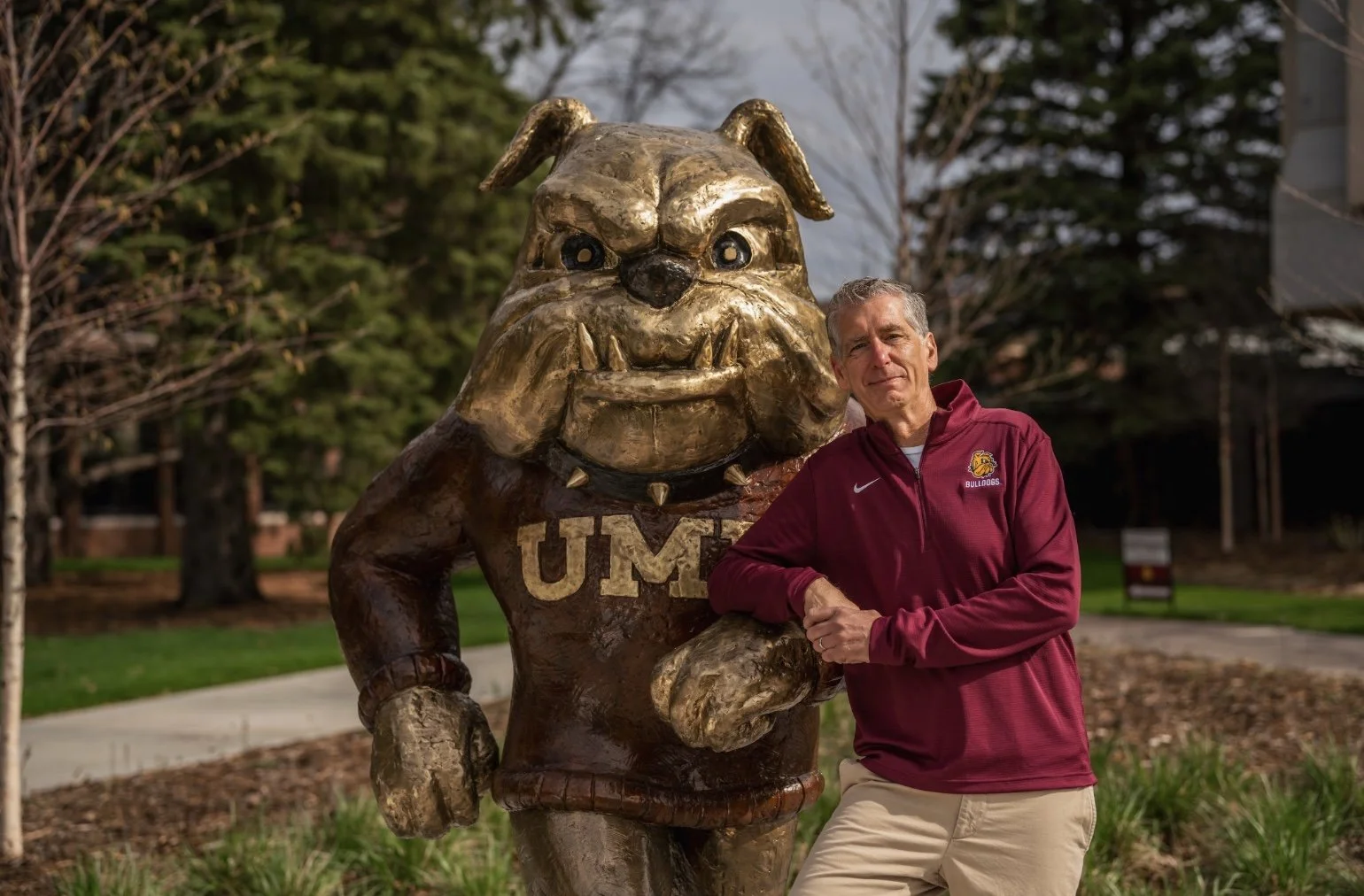
Chancellor Charles Nies with the Champ statue. Photo by The University of Minnesota Duluth