Professor Hark: Papermaking Workshop & Crafting the Next Generation of Papermakers
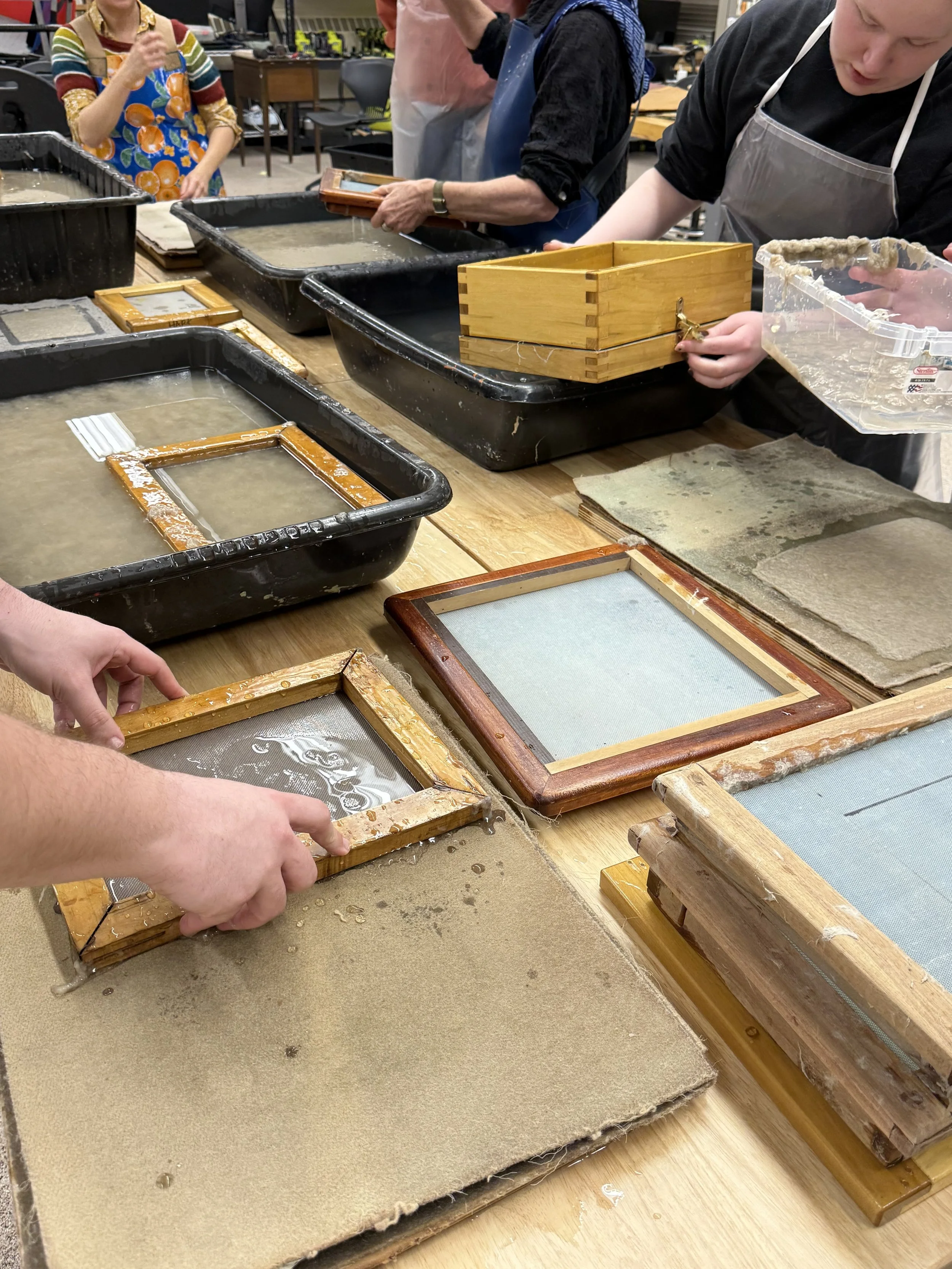
Hark dipping the frames into the flax fibre to make the paper. Photo by Elysia Kjellberg
UMD Makerspace hosted Professor Mary Hark for a handmade paper-making demonstration and workshop this past week, inviting attendees to get their hands dirty, just like her students.
Professor Hark showcased her 30+ years of experience in artisanally crafting handmade paper from a wide range of organic plant materials. She offered event attendees the opportunity to get their hands into the process as well and create some paper out of flax fibre. “Many students are too sincere and in their own heads,” Hark said, “You just have to step up to the vats and feel relaxed and do it all in one fell swoop, even though you’ve never done it before.”
Hark has been teaching her craft for many years, and her dedication to the process shows. She detailed her students' work, along with her own, in her demonstrations and highlighted the great work that she’s helped foster.
She shared stories of all of the incredible artists who were formed in her classes, sharing specifically how she taught a class that was meant to only briefly cover paper making as an art form, but she and her students ended up spending the entire semester perfecting the art of making paper from a local plant of their choice.
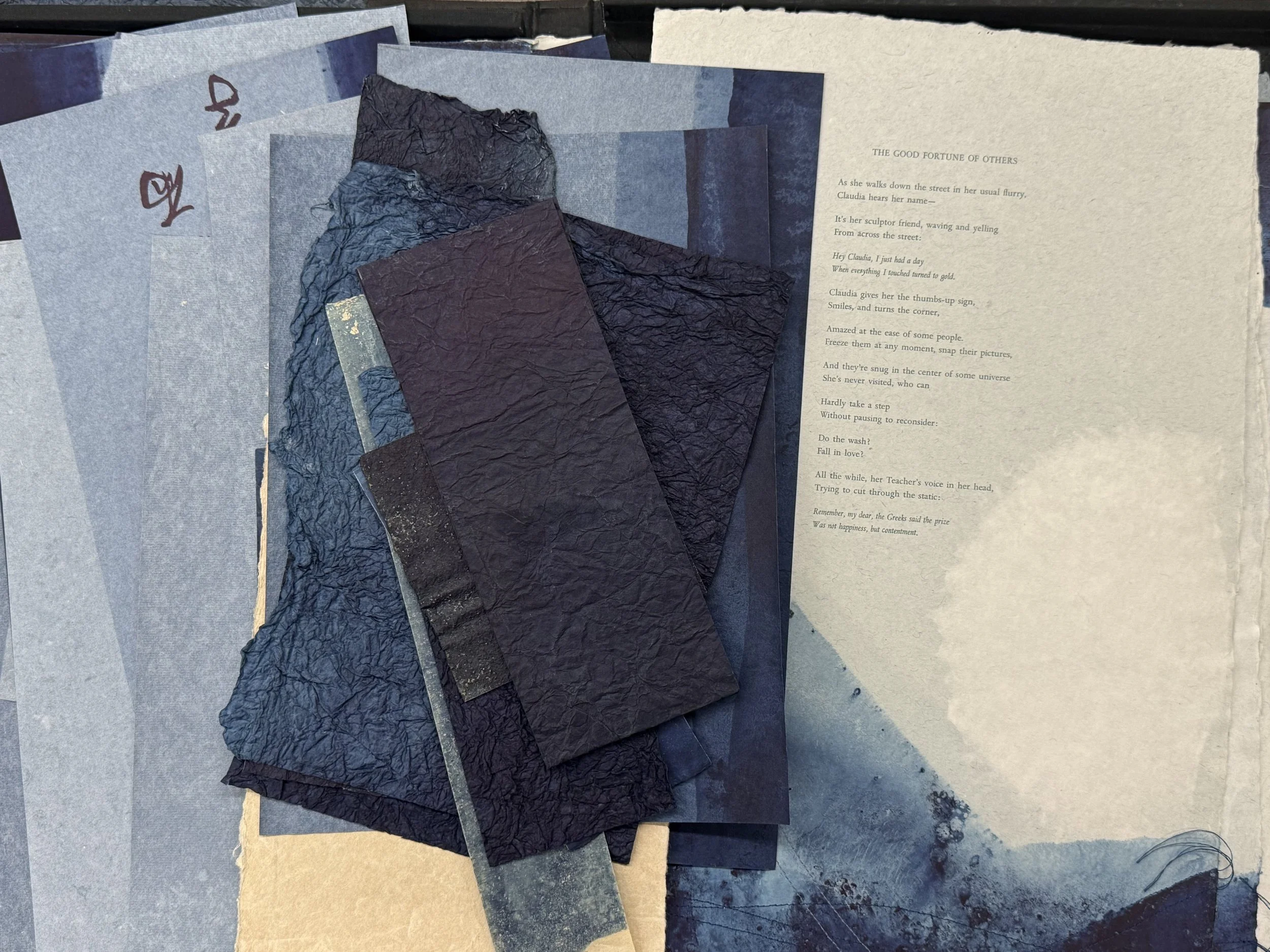
Examples of the finished paper Hark made for the demo. Photo by. Elysia Kjellberg
Her commitment to the craft is especially evident in the way she speaks about the process of turning natural fibres into workable materials. She spoke about how it takes “Thoughtfulness and strength” to break down the raw material into something that can be condensed into sheets of paper, which can then be further transformed into all different kinds of art.
Hark is an educator who fosters her students' growth from a place of inexperience to becoming artisanal crafters themselves; she clearly connects the similarity of her students' transformation to the relationship between turning raw material into art.
Hark also emphasizes the importance of learning the materials you work with, “Every blender is entirely different from studio to studio,” she said, “You have to learn the equipment you are working with.” This is much like the way she has to learn each student and their style of creating art; it is about learning the value process as a whole and not just the end product.
Papermaking as an art form is entirely organic and unpredictable, working fully with the natural flow of the artist’s hands as they form the paper. The process offers many possibilities and is something many can find relaxing, which can deepen their relationship with the natural world.