Local Caucuses: Why, Where, What Happened?
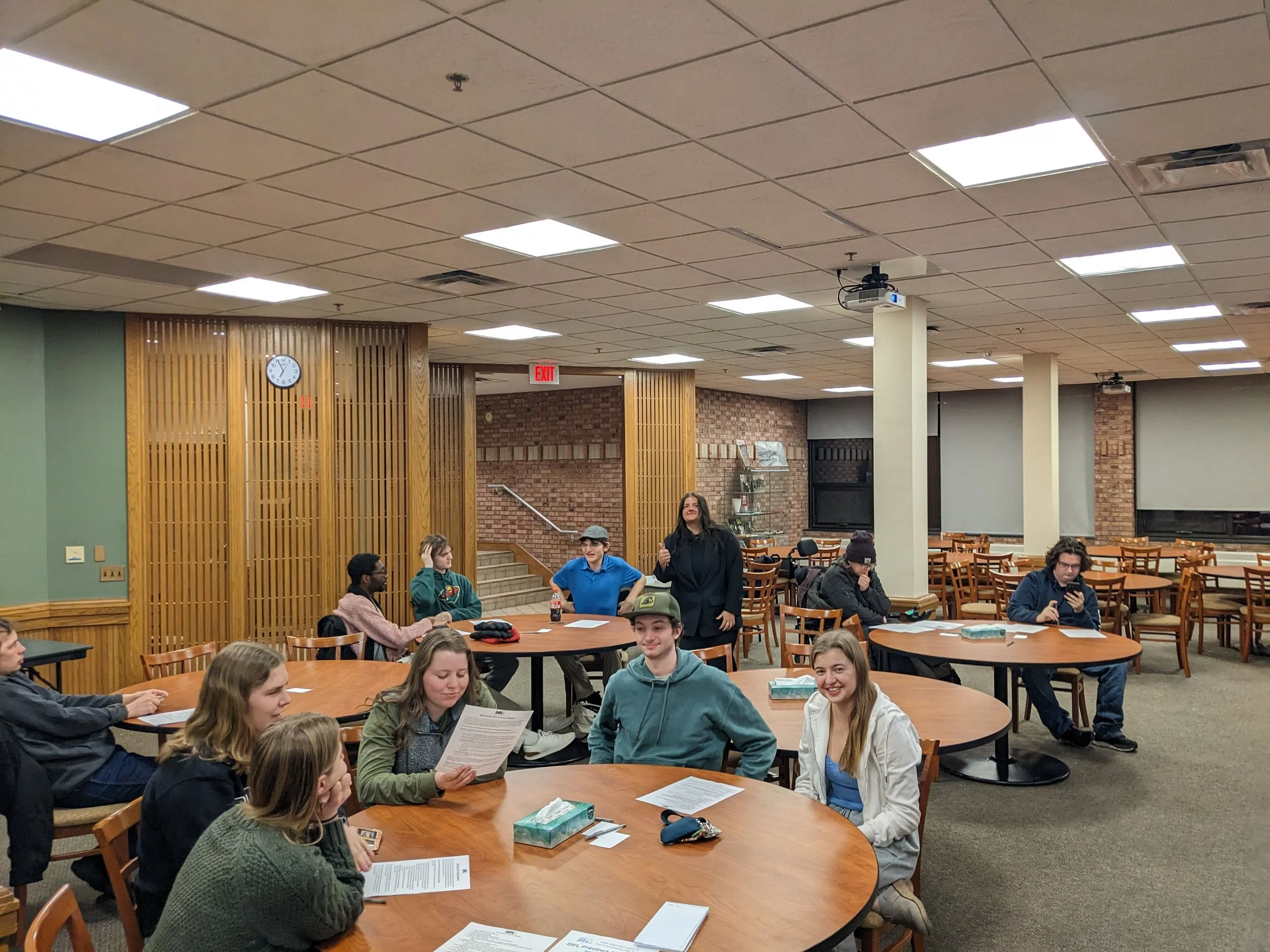
More people attended the Caucus this year than previous years, said Sawyer Lepsch, who convened the caucus. Photo by William Bauer
Tuesday, Feb. 3rd marked the beginning of the democratic process with caucuses across Minnesota. In Duluth, both the Democratic-Farmer-Labor Party (DFL) and the Republican Party of Minnesota (GOP) held caucuses. These events provide the opportunity for voters to express what they would like to see from their party and for the party to see which candidates garner support early in the election cycle.
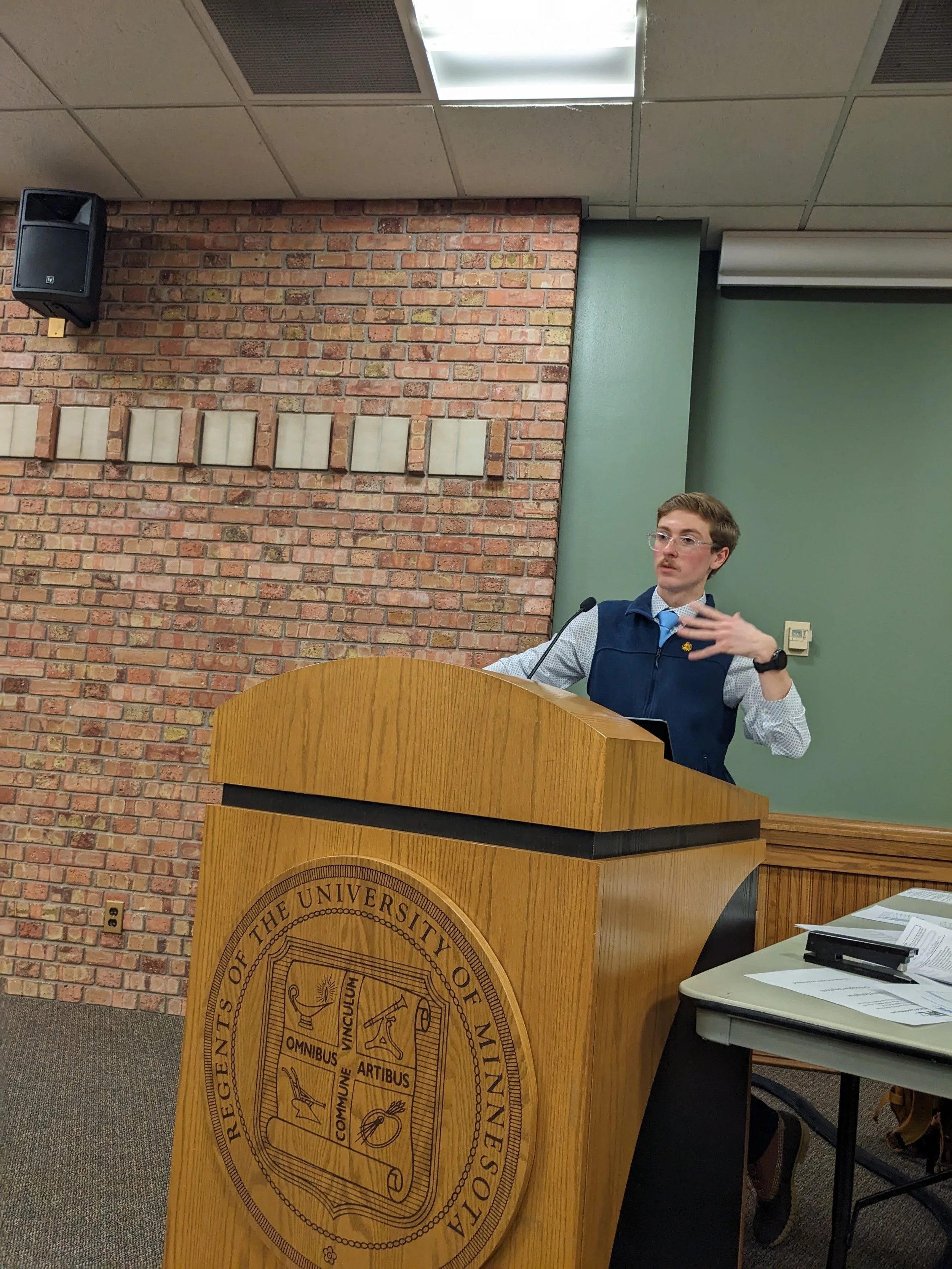
Sawyer Lepsch talks about the caucus, chairing the event on Tuesday, Feb. 3rd. Photo by William Bauer
Sawyer Lepsch, an involved freshman at UMD, explained a bit about DFL caucuses, noting that the GOP has a very similar process. Precinct caucuses in particular are “a time for community members in a small neighborhood…to communicate what they believe about, issues that they deem important to them and get people from the local level directly involved.” It’s often referred to as “grassroots,” meaning that it’s the most basic form of democracy.
Aside from regular resolutions where the people introduce ideas and solutions they wish their party to undertake, this year’s caucuses included a “gubernatorial” vote. The gubernatorial ballot simply polls the caucus attendees’ interest in candidates for governor. This way, the party and the candidates know more about where people stand and who they can endorse later on. As for resolutions, those that pass move on and eventually shape the party’s platform.
On the University of Minnesota Duluth (UMD) campus, DFL Precinct 10 gathered in Griggs Center. Lepsch, who is also the Vice President of the College Democrats at UMD, convened the caucus. Around 20 people showed up, including staff, students, and community members. Lepsch was pleased with this number, saying previous years had quite a few fewer. One non-attendee resolution was read and passed on the subject of ranked choice voting, another in-person resolution supporting disability visibility was also passed and a final resolution was passed regarding Immigration and Customs Enforcement (ICE). As for the gubernatorial ballot, Precinct 10 favored Amy Klobuchar.
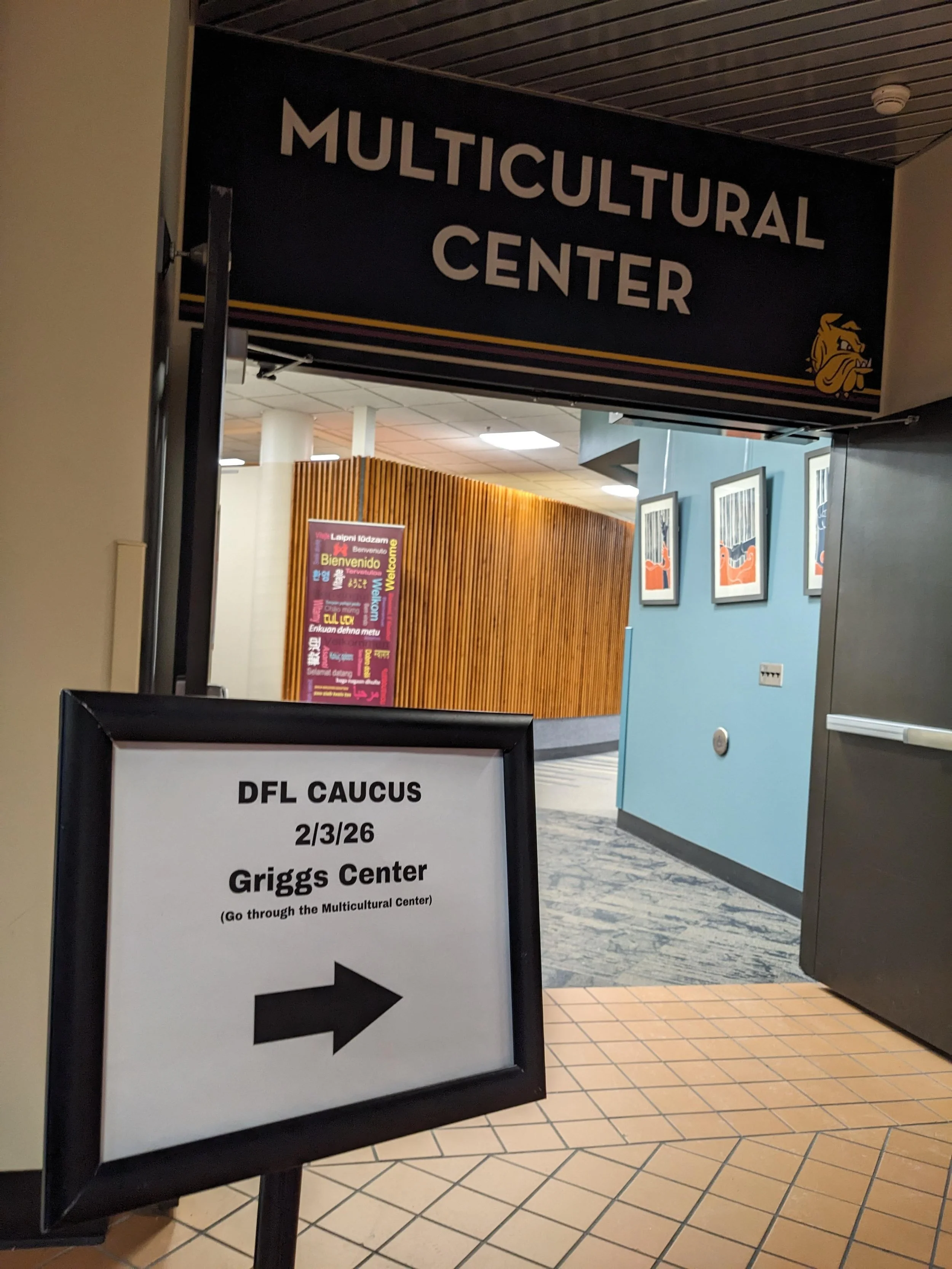
The DFL Senate District 8 Precinct 10 Caucus was held on the UMD campus for the first time in a while. Photo by William Bauer
On the other side of the aisle, GOP caucuses met in Lincoln Park Middle School. One Duluth Caucus attendee and Deputy Chair for the Republican Party of Minnesota, Donna Bergstrom, reported “education savings accounts were discussed in Duluth to add to the Party platform under the Education plank,” but she was unable to speak to any other precinct discussions. The GOP as a whole in Minnesota also voted on preliminary governor interests, with a much larger field. Lisa Demuth came away in the lead with 31.9 percent of the votes, and Kendall Qualls came in second with 25.3 percent. Over 11 other candidates, including a not decided option, were also on the ballot. Full results can be found at mngop.com.
Next steps include a Senate District 8 convention for each party, with the DFL’s on March 28th, and the GOP’s on March 14th.