
Sailing Superior: From The Edmund Fitzgerald to the Technology of Modern Ships
This article was originally published in the November 2025 print edition of The Bark, distributed at the University of Minnesota Duluth campus.
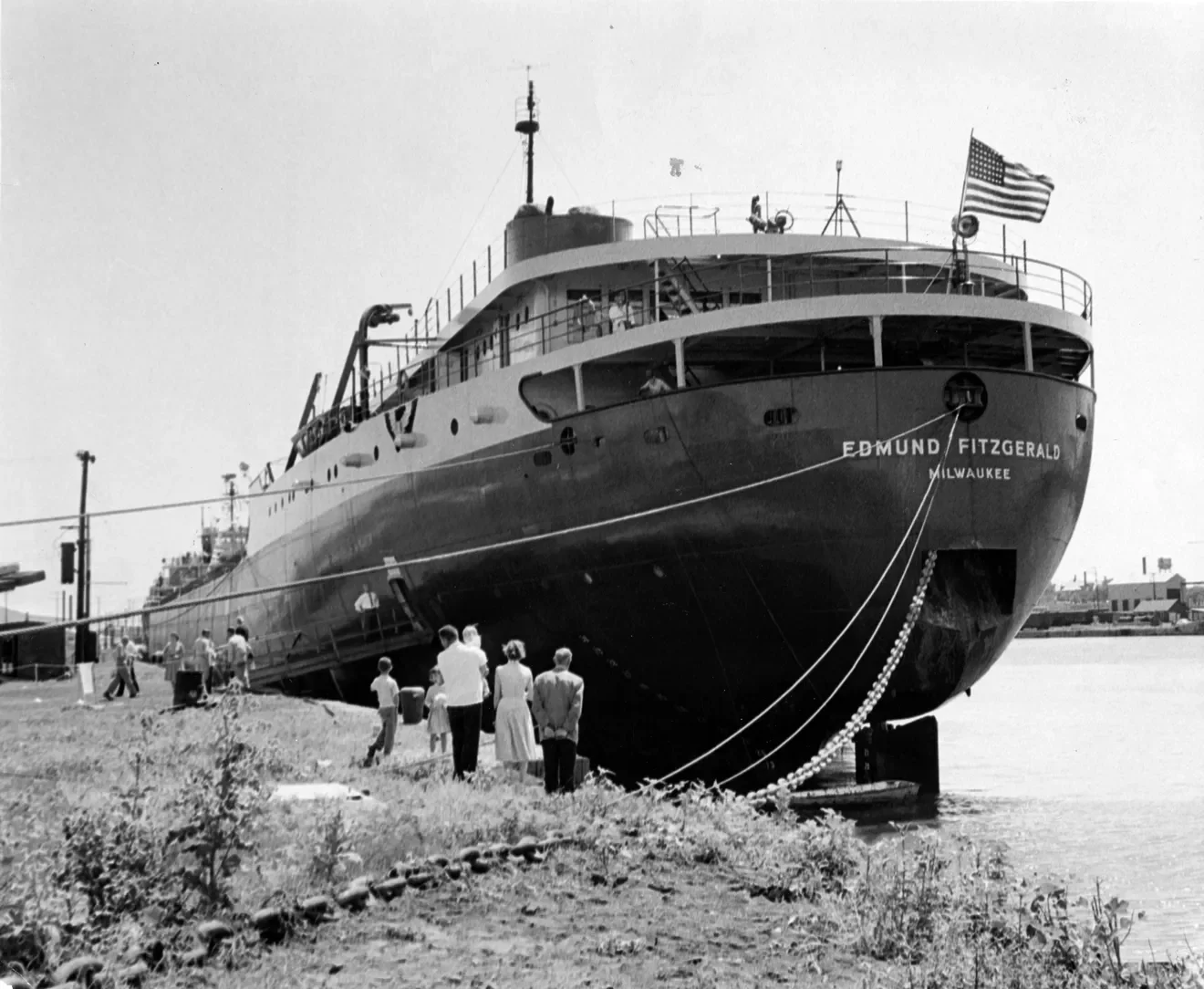
A look at the stern of the berthed ship Edmund Fitzgerald taken from the shore. Provided By Milwaukee Public Library
Nov. 10, 2025 marks the 50th anniversary of the wreck of the Edmund Fitzgerald. Over the years, the ship has become a part of the regional and cultural identity of the Great Lakes. Since 1975, there have also been immense advancements in technology that help us avoid tragedies like the Fitzgerald on the Great Lakes. As the largest freighter at the time it sailed, the Fitzgerald gained notoriety from the now iconic song, Gordon Lightfoot’s “The Wreck of the Edmund Fitzgerald.” While the song is one of Lightfoot’s most notable, there is just one problem with it.
“So the song is about 80% wrong, and unfortunately, most people pick up their clues about the wreck from that,” said Ric Mixter, a shipwreck researcher who has dived down to over 100 wrecks on the Great Lakes, including the Edmund Fitzgerald.
Through connections and his maritime experience, Mixter and another photographer from his CBS station, where he was a journalist at the time, got the opportunity to dive down to the Fitzgerald in 1994. This was one of the last expeditions down to the Fitzgerald when in 2006, the Canadian Government made it illegal to dive down to the wreck. With the boat being protected under the Ontario Heritage Act, and in Canadian waters, no one can come within a 500 meter (1,640 feet) radius of the wreck to preserve it as a maritime archeological site and gravesite.
The Fate of the Edmund Fitzgerald
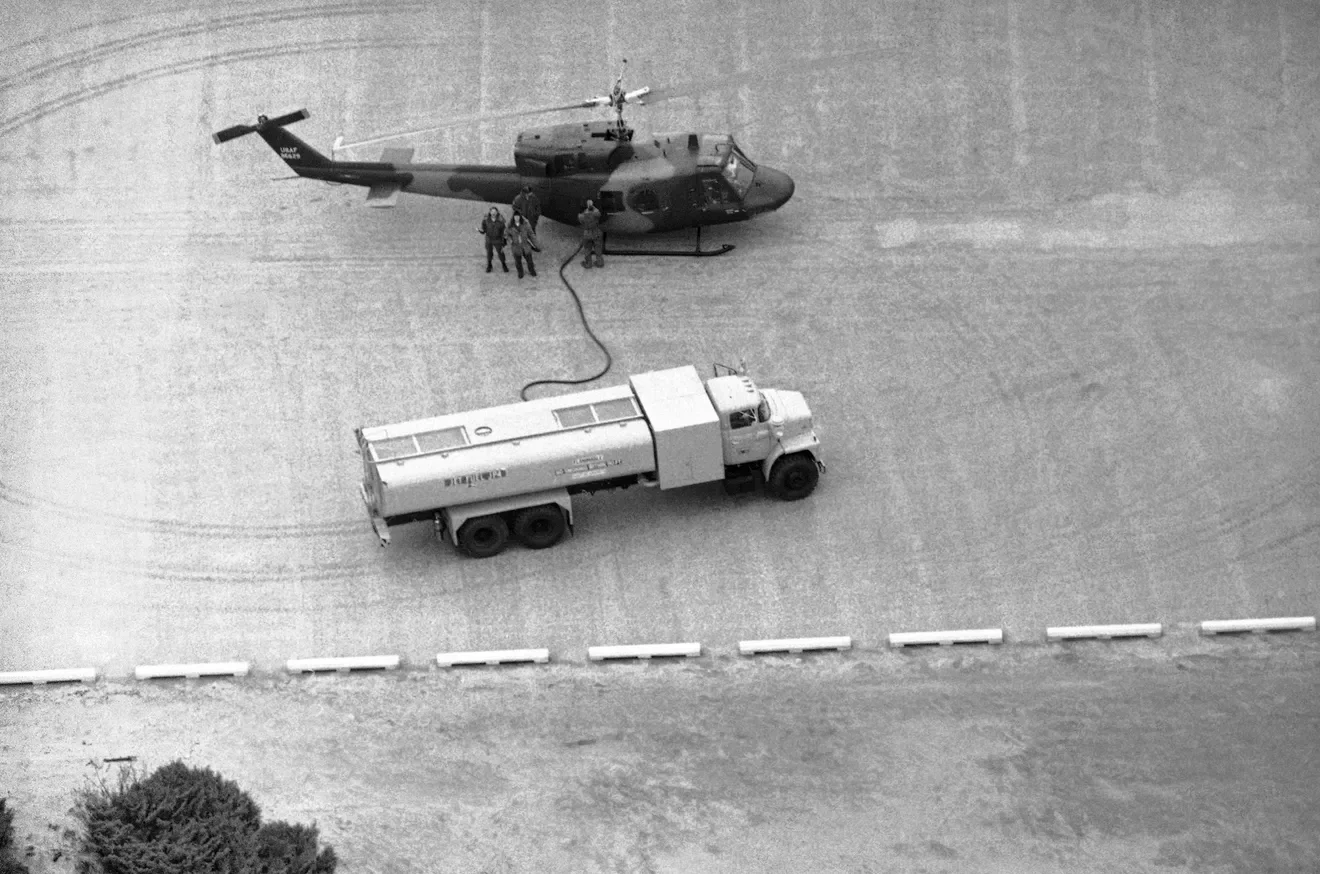
A helicopter that aided in finding the missing SS Edmund Fitzgerald. Photo taken from Associated Press.
Owned by the Northwestern Mutual Life Insurance Company at the time it sailed, the Edmund Fitzgerald was one of the largest steam engine freighters on the waters of the Great Lakes. Today, there are only four steam engine freighters left that are sailing the Great Lakes, according to Joseph Lane, an assistant professor at the University of Minnesota Duluth with a master’s degree in Applied Geography and Ph. D in Science Education who teaches a course called “Geography of Great Lakes transportation.” Coming in at a length of 729 feet long, the ship travelled through the waters of Lake Superior and Lake Michigan all the way to Lake Ontario and Lake Erie. This was the maximum allowed length for a ship to make its way through the St. Lawrence Seaway and the Welland Canal, according to Lane. “There are eight locks in this canal, and each of them lower you down to Lake Ontario,” said Lane, “these locks can only handle a boat as big as the Fitz.”
On the ship's course, she left from a dock on Wisconsin Point, rather than a mill. The dock at the time was called the Great Northern Railroad, which has since shut down. The Fitzgerald was partially loaded and heading for Detroit, MI, according to Mixter. Captain of the Edmund Fitzgerald, Ernest M. McSorley, was a seasoned maritimer with over 40 years of experience. Captain of the Arthur M. Anderson, Bernie Cooper, and Captain McSorley were known as “heavy weather captains.” The Arthur M. Anderson is the last known ship to have contact with the Fitzgerald before she went down.
“This basically means that they were willing to take a beating out there in the open sea. I would argue that they never agreed to put their ship in so much danger, but they would downplay weather forecasts,” said Lane.
According to the Great Lakes Shipwreck Museum, when the Fitzgerald sank, it was carrying 26,116 tons of taconite pellets. At the time in 1975, this would have $1.13 million dollars in product, which in today's money is now $2.5 to $2.73 million dollars. The taconite pellets that the ship was carrying is what would later aid in finding her. The Fitzgerald was found by the U.S. Navy using P-3 Orion Aircraft that were fixed with a stinger on the back to detect metal at the bottom of the Great Lakes and the ocean. These aircraft would have been used for finding Soviet submarines during war times.
“So that plane went over, and the guys looking for submarines watched the meter, and it went ‘wham’ when it hit over that,” said Mixter.
Furthermore, the wreck site was surrounded by taconite pellets, “that was one thing in one of the first voyages that they had a camera down there, " said Jordan Stish, the museum manager and interim director of Superior Historic Properties. “They were able to see taconite pallets spread for three and half miles around the shipwreck. So when it went down, taconite was falling everywhere, and it's all still down there today,” said Stish.
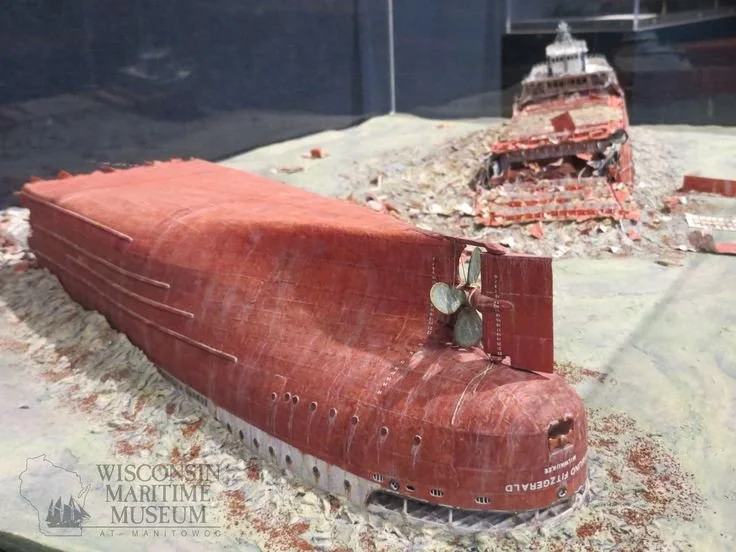
Model of the Edmund Fitzgerald sitting wrecked at the bottom of Lake Superior. Photo from the Wisconsin Maritime Museum.
Technology
The Edmund Fitzgerald was fixed with two radar systems, compasses, a gyroscope, a device used to keep the ship on track, and stop watches by the captains. These devices were used to help determine the ship's course and keep it on track for its voyage. The ship also used another navigational technique called “dead reckoning.” This is a navigation method that would tell captains how far they have travelled based on their time, speed and direction.
The biggest factor for the ship's fate would have been the weather. Unlike today's technology where people can track storms using their phones, and the modern use of the Global Positioning System (GPS), the captains at the time would have had to have been seasoned meteorologists. They were getting printed off data in forms of code that could tell the wind direction and speed, according to Lane.
“They may have had radar to see what’s immediately around them, but they couldn’t really track that low pressure in the same way that we can today,” said Lane.
According to Mixter, the Fitzgerald had taken this route at least three times earlier in the season and would have used their Radio Direction Finder (RDF) to help guide them as to where to make their turn.
“The weather guys, the boat guys, all misjudged it by two hours,” said Mixter, “by the time the Fitzgerald got up to the Otter Head Point, the light house where they make the turn, they realized they were in the eye of the storm.”
What led to the demise of the Fitzgerald was her hatches.
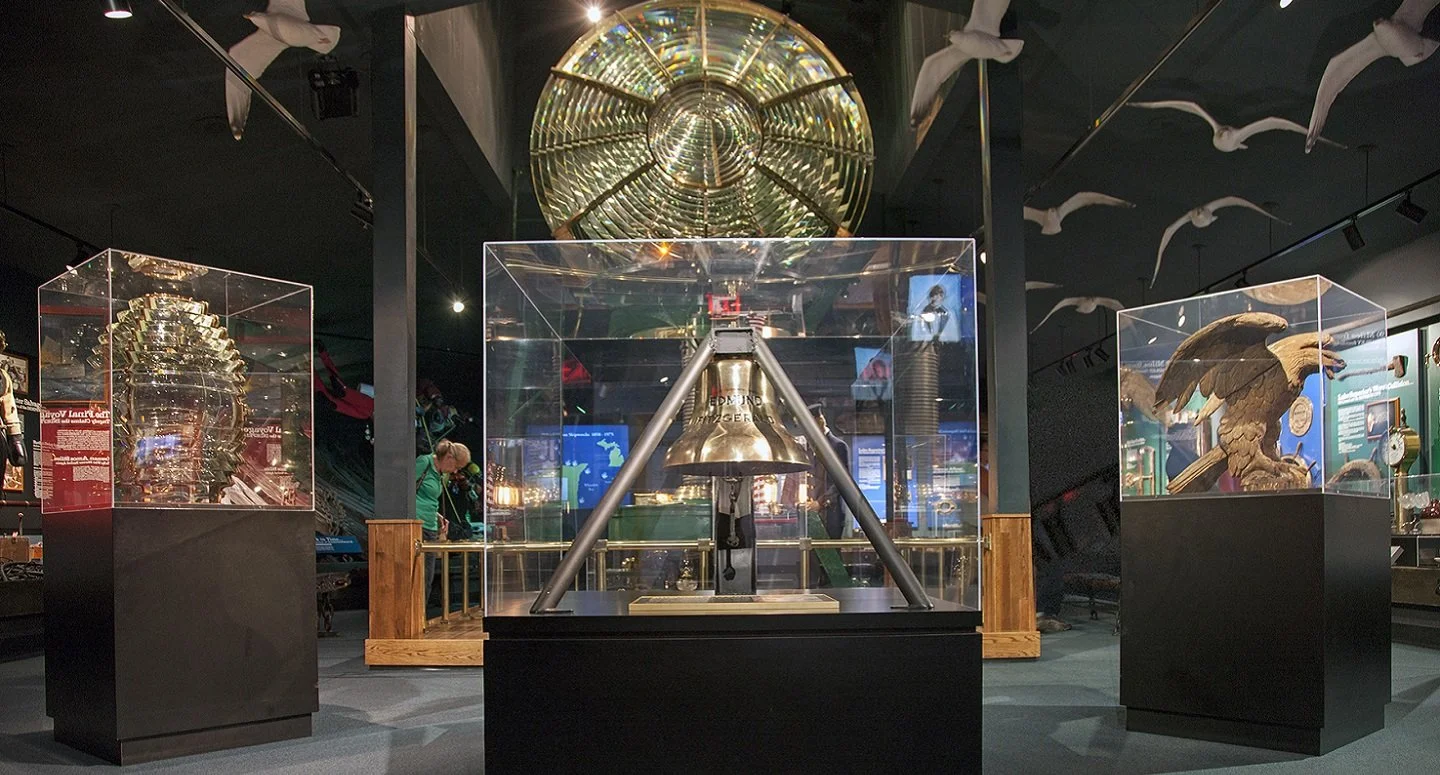
The bell from the Edmund Fitzgerald that is on display in the Great Lakes Shipwreck Museum. Photo from the Great Lakes Shipwreck Museum Website
“We know that those hatches leaked,” said Mixter. “Those waves came up and crushed those hatch covers at one and six, and it couldn’t come back up.”
The Edmund Fitzgerald sank on the night of November 10, 1975. Breaking at the surface, scattering thousands of taconite pellets into the waters below, before flipping upside down and sinking into her watery grave, taking all 29 crewmen aboard with her.
According to Mixter, in the following year the Coast Guard began doing surprise inspections on freighters, they found that, “80% of the ships in 1976 were out of compliance. They weren’t dogging their hatches down.” This soon fell to only 20% of ships being in non-compliance, which according to Mixter, has saved a lot of lives.
Today, ships are equipped with state of the art technology such as GPS and multiple different software used to navigate the Great Lakes with the use of satellites. Still, the Great Lakes are dangerous waters to travel on, even compared to the ocean. Lane encourages people to think of Lake Superior like a bathtub.
“On the Great Lakes, when you get a storm, the wavelengths are much closer together,” said Lane. “It’s just like this pounding that continuously happens.”
This causes lots of stress to boats and is what can make the 25 to 35 foot waves that were hitting the Fitzgerald so catastrophic.
Regional Identity
Today, many efforts have been made to study, preserve and protect the wreck site and legacy of the Edmund Fitzgerald. First hand and second hand stories of connections to the Fitzgerald are part of what keeps its legacy going. Historian Jordan Stish says some of the most important are the stories and connections that people can tell and pass down, as it helps with getting multiple sides to a story and not just one.
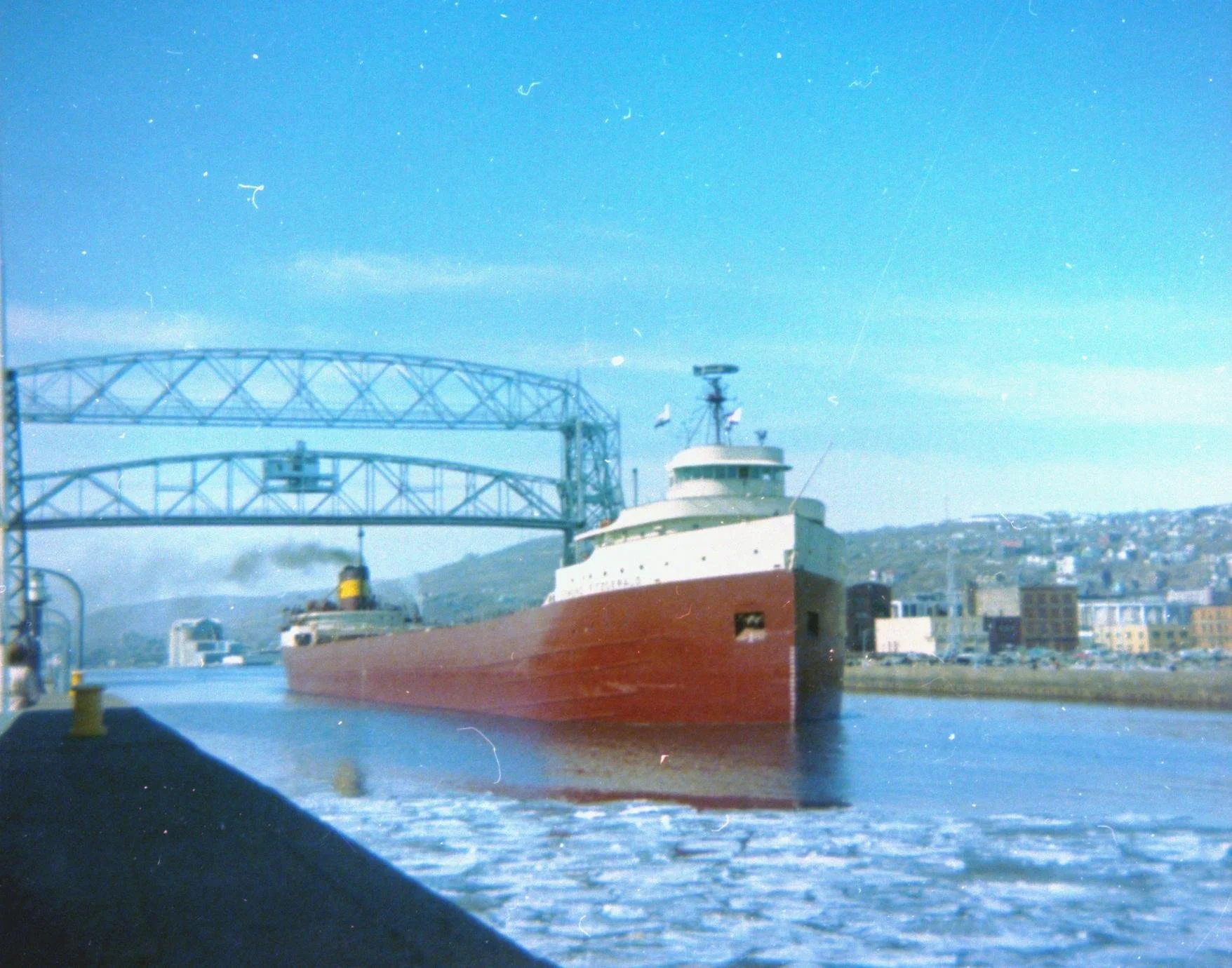
Edmund Fitzgerald, passing under the Aerial Lift Bridge leaving Duluth Superior Harbor. Photo courtesy of Lake Superior Marine Museum.
“We’re not going to have people with oral histories forever,” said Stish. "Unfortunately, time is the biggest enemy of any historian trying to collect information.”
Part of what makes the Edmund Fitzgerald so engrained into the regional identity of the Great Lakes is how integral the shipping industry is. Even to the Twin Ports alone, hundreds and thousands of people worked in mines, at docks and on ships around the Great Lakes.
“We were the last people to see that ship, and that just makes it a little bit more personal,” said Stish.
Earlier this year, a local group called “Friends of the Fitz,” began raising money for a historical marker for the Fitzgerald. Working with the Wisconsin Historical Society, they raised enough money to get the marker along with a stone underneath it to engrave every man’s name on it. On Sunday, November 9th at 7 p.m., there will be an unveiling ceremony on Barker’s Island where the memorial will go up and officially be added to the Wisconsin Historical Society registry.
“The best time to do it would have been 50 years ago. The second best time to do it is now,” said Stish.
The legacy of the SS Edmund Fitzgerald will live on for years to come and serves as a reminder of maritime disasters across the Great Lakes region and sacrifices made along the way.
As Stish said, “We’re telling the facts. We’re giving light to these men’s names. We’re sharing their stories from their families. We’re really trying to make sure that they are honored, grieved and memorialized in a respectful way.”