UMD Minds Come Together to Build a Solution for Needle Disposal in Duluth Public Spaces
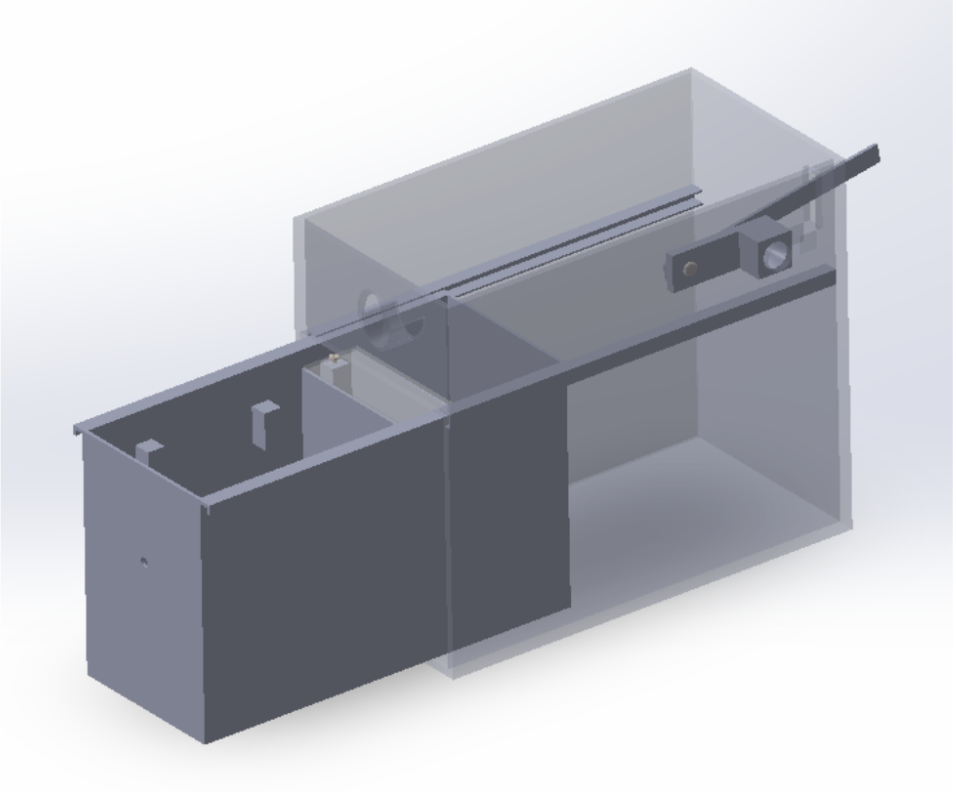
3D model of the initial design for a sharps disposal box that was rejected.
Over the last four years, UMD professor Aparna Katre has been leading classes on researching and improving a high-impact project to create a better needle disposal box for Central Hillside’s Cascade Park.
Each spring, her students work on researching a local problem and workshop viable solutions. That research then gets passed along to other organizations, such as non-profits like the Sisters of Harm Reduction, as well as student organizations like the local chapter of Engineers Without Borders.
Over the lifespan of the project, a number of ideas have been proposed, designed and tested. So far, each one has faltered due to unforeseen problems with the human and social aspects of design. Despite these setbacks, being able to learn and reiterate on designs has been beneficial for the students, particularly the engineers who have been working with the project for multiple years.
“Community-engaged learning is a high-impact practice. Its strength lies in giving students a central role in tackling real community challenges, especially those that are complex, wicked, and requiring deep stakeholder engagement,” Katre explained.
“The management of the unsafely discarded sharps project is one such example where three different groups of students have worked and advanced from understanding the issue to developing a product prototype.”
The sharps box project began in the summer of 2021 as she was discussing with members of a local support initiative in the hillside area of Duluth who mentioned there being a problem of needles being disposed carelessly in the park rather than in proper disposal bins.
Working together with non-profits and the county, they were able to get a needle disposal box posted just outside the park by spring the following year. This box was evidently insufficient, as needles continued to be found in the park. This led Aparna to ask some of her students to research the problem and potential solutions as a class project, the results of which were handed off to local non-profits and other student organizations, such as Engineers Without Borders.
Conner Tuman, a member of EWB, described his work with the project over the 2024-25 school year, saying, “It’s been a lot of lessons in project management, a lot of learning experience.”
The team he led was looking for a new project to work on when Katre proposed the task of designing a better box for sharps disposal, which they eagerly accepted. Their initial design was roughly the size of a shoe box and featured a hole in the front for sharps to be cut off and disposed of with a removable bin for collection when the box filled. This was unfortunately rejected, as a number of potential users would have a number of needles to dispose of at once, which would be rather tedious with the single hole for removing needles.
Other proposed ideas included a vending machine of sorts, a box that dispensed redeemable tokens, or installing them on buses. All of them failed due to more human concerns, such as the bus installations being unused due to the shame of disposing of needles in a more public setting.
While the engineer’s first design was rejected, the team is currently working on a new design, using a drop-down design similar to ones used in mailboxes.
For the engineers working on it, it’s been a great experience learning how to operate as a team on a singular project. As for the community, anything that can help clean needles off of where they might step is welcome.