
The Northern Lights Express and the Debate Behind it
This article was originally published in the November 2025 print edition of The Bark, distributed at the University of Minnesota Duluth campus.
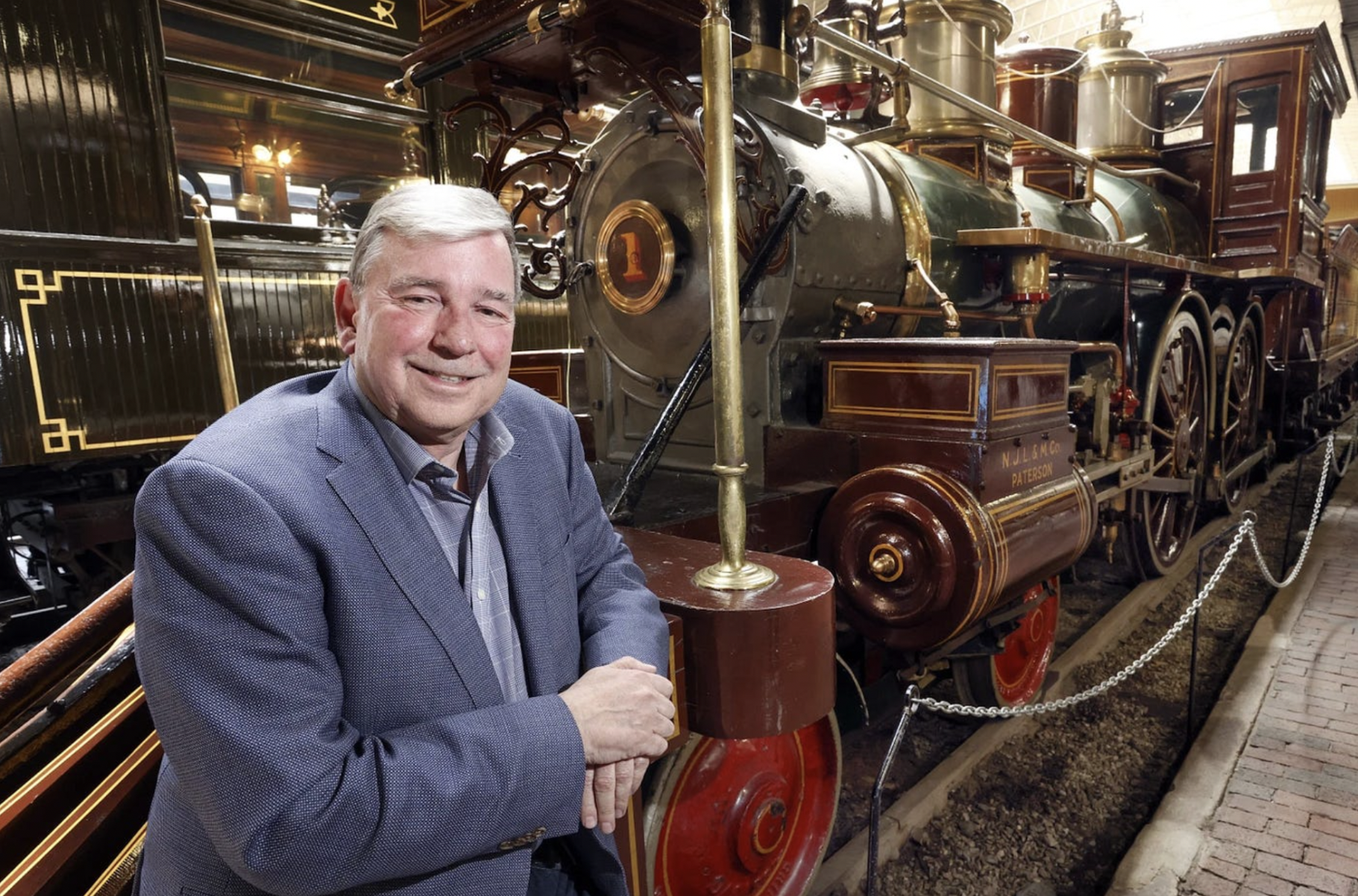
Ken Buehler stands in front of 1861 William Crooks steam engine at the Superior Railroad Museum. Photo by Steve Kuchera
Picture yourself on your way up north or down south or wherever you would take yourself after a long week. Imagine your surroundings. Who are you with? What is the view like? What is your mode of transportation?
If you said driving a car, you aren’t alone. When it comes to traveling over 50 miles, 90% of Americans choose to use a personal vehicle, 2% take the bus and only 1% travel by train.
Compare that number to Europe where 29% of people use trains for long distance travel. Why is it that Americans keep choosing cars over public transportation?
Ken Buehler, NLX Alliance Technical Advisory Committee chair and head of the Lake Superior Railroad Museum, believes it’s a matter of choice.
“It’s all about the freedom of the road. I go when I want, I go where I want. And that’s okay. There’s nothing wrong with that,” Buehler said. “Have you priced a new car lately? That freedom comes with a price.”
Ken Buehler stands in front of 1861 William Crooks steam engine at the Superior Railroad Museum. Photo by Steve Kuchera
For years, many Minnesotans have been debating over a two-way passenger train running between the Twin Cities and Duluth, a project called Northern Lights Express.
The train would run on 152 miles of existing tracks owned by BNSF railway. It would make four round trips daily, speeding up to 90 mph making it a two and a half hour trip with 7,000 expected yearly riders.
This wouldn’t be Minnesota’s first passenger train between the Twin Cities and Duluth. From 1975 to 1985, Amtrak’s Northstar ran a daily round trip, funded in part by $1 million in yearly state support. The service ended in 1985 when funding could not be renewed, marking the last time trains ran the route.
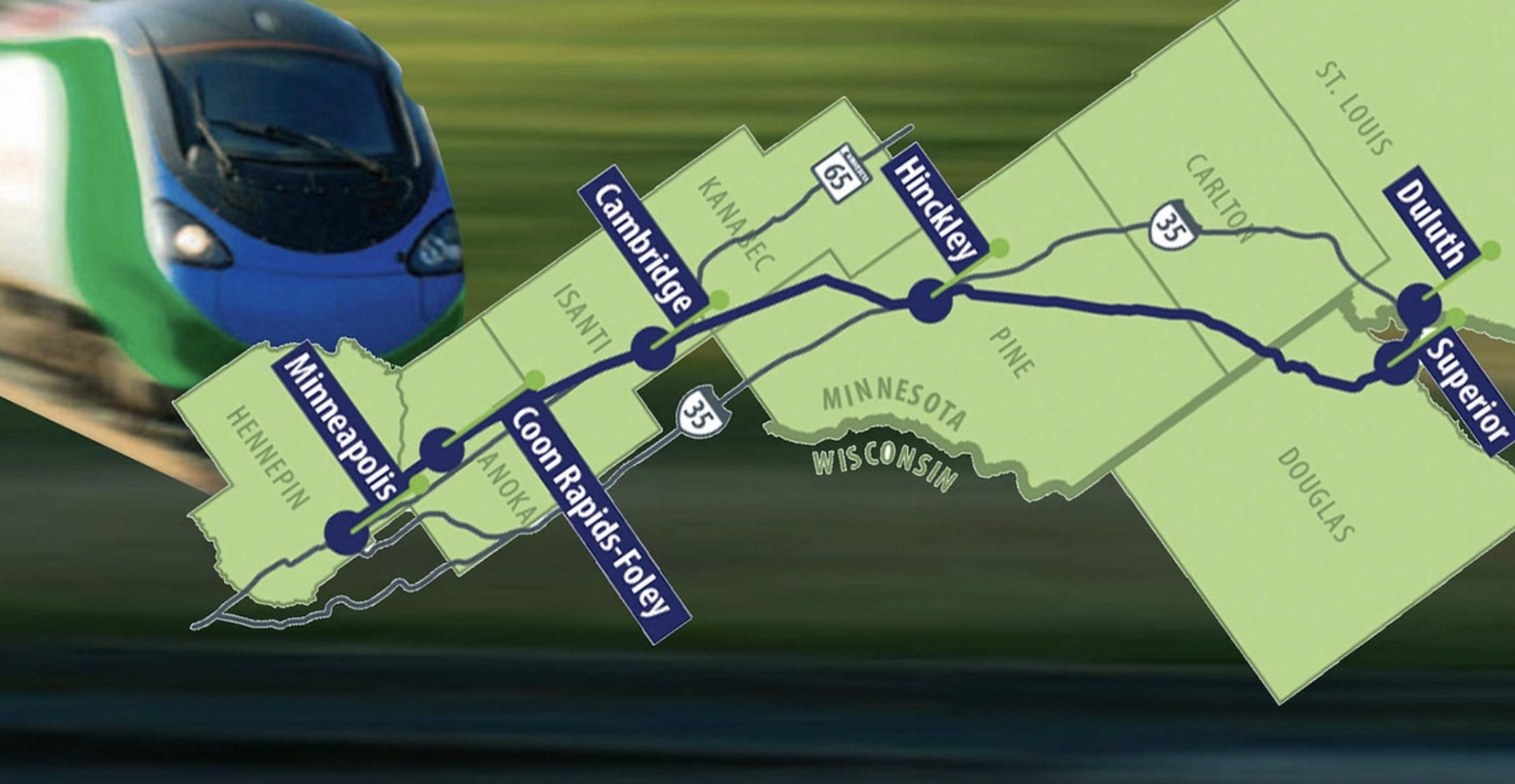
Map of the Northern Lights Express route
At 92 years old, Joanne Johnson, a worker at the Superior Railroad Museum, witnessed firsthand the transition from trains to cars.
“Trains were extremely important to the development of the country. Everything came on the trains — building materials, immigrants, thousands of people coming through here,” Johnson said. “If train transportation works all around the world, why can’t it work here?”
Train enthusiasts like Johnson hope the coming generations will keep the conversation of train travel alive and push for more mass public transportation.
Bob Manzoline, executive director at St. Louis and Lake Counties Railroad Authority, as well as the NLX Alliance, gave insight on the project’s future plans.
“It just depends on the federal component, how they view it and if they’re gonna fund it. It’s gotten political, some like trains, and some don’t. Right now, all those that don’t seem to be in power in Washington,” Manzoline said.
In May 2023, a portion was taken from the NLX fund and shifted toward paying school workers, setting the project back $77 million.
Jacob Alm, legislative assistant for Rep. Patti Anderson, who proposed a bill to eliminate the project’s funding, gave insight into the opposing side of NLX.
“It was just a numbers game,” said Alm. “How do you help the most people with the amount of money that there is?”
Members of the Republican Party like Anderson often oppose mass public transportation plans like the NLX and believe the money could be directed towards more important things.
“There are much better ways of moving people around than another train project that likely won’t end up funded by the feds anyway. We have significant maintenance needs on our current roads and infrastructure that aren’t being met and $200 million will go a long way towards helping with that right now,” said Anderson. “We need to be realistic, face reality and take care of what we have.”
After the funding was redirected in 2023, many people were and still are uncertain about the project’s direction. While opposing members believe it isn’t worth the cost, many remain optimistic that the train will run.
“We are in the process of reapplying for the federal funds necessary to complete funding for the project,” Buehler wrote in an email.
“Everybody in Japan rides trains… everybody in Europe rides trains… They go 250 miles an hour in France. We are people just like everybody else,” Buehler said. “To the people that say it’s not going to work, I just say, tell me why you think it’s not going to work? And then look at the rest of the world, we’re not that different.”
The state and federal lawmakers aren’t the only ones with an opinion on the NLX project. Zephyr Bulera, a UMD student, rides the Jefferson Lines bus every other week down to the cities for work.
“I really, really appreciate having the bus because I don’t have to worry about my own vehicle… being able to have that kind of connection with other people is also cool,” Bulera said.
Bulera is just one of many students who relies on public transportation to get around. Whether that be within the city or across the state, they believe an alternative option would be valuable.
“I can’t think of one negative opinion,” said Manzoline when asked about students’ reactions to the option of a train. The student experience is just one glimpse into the bigger picture of NLX and its riders.
“It’s about our society and about how we’re going to move everybody, so that no one is excluded, and that everyone can travel in a form that is comfortable, clean, safe and affordable,” Buehler said.
It’s been 40 years since a train carried passengers between Duluth and the Twin Cities. The question remains: with limited funding, what does the future of transportation look like for Minnesotans?