
Ice Safety With the St. Louis River Alliance
This past Saturday, Feb 7, the St. Louis River Alliance, in partnership with the Minnesota Department of Natural Resources(DNR), held an event on ice safety. The event focused on educating the community about the dangers of going out on the ice, how to be prepared, and how to safely navigate an emergency out on the ice. The event featured demonstrations on what to do if you or someone else falls through the ice and how to avoid an incident like that from happening.
The event kicked off with an introduction and then people were split into two groups led by DNR officials. One group demonstrated what to do when someone falls through the ice and the other demonstrated how to measure ice thickness. Both demonstrations were accompanied by several tips on staying safe out on the ice and some gear that may be useful when going out.
Generally, a minimum of 5-7 inches of clear, solid ice is recommended when going to walk out on the ice. Some useful gear to consider using would be ice picks worn around the neck to help pull yourself out if you fall in, ice cleats for traction, and some sort of personal floatation device. Especially when venturing onto questionable ice.
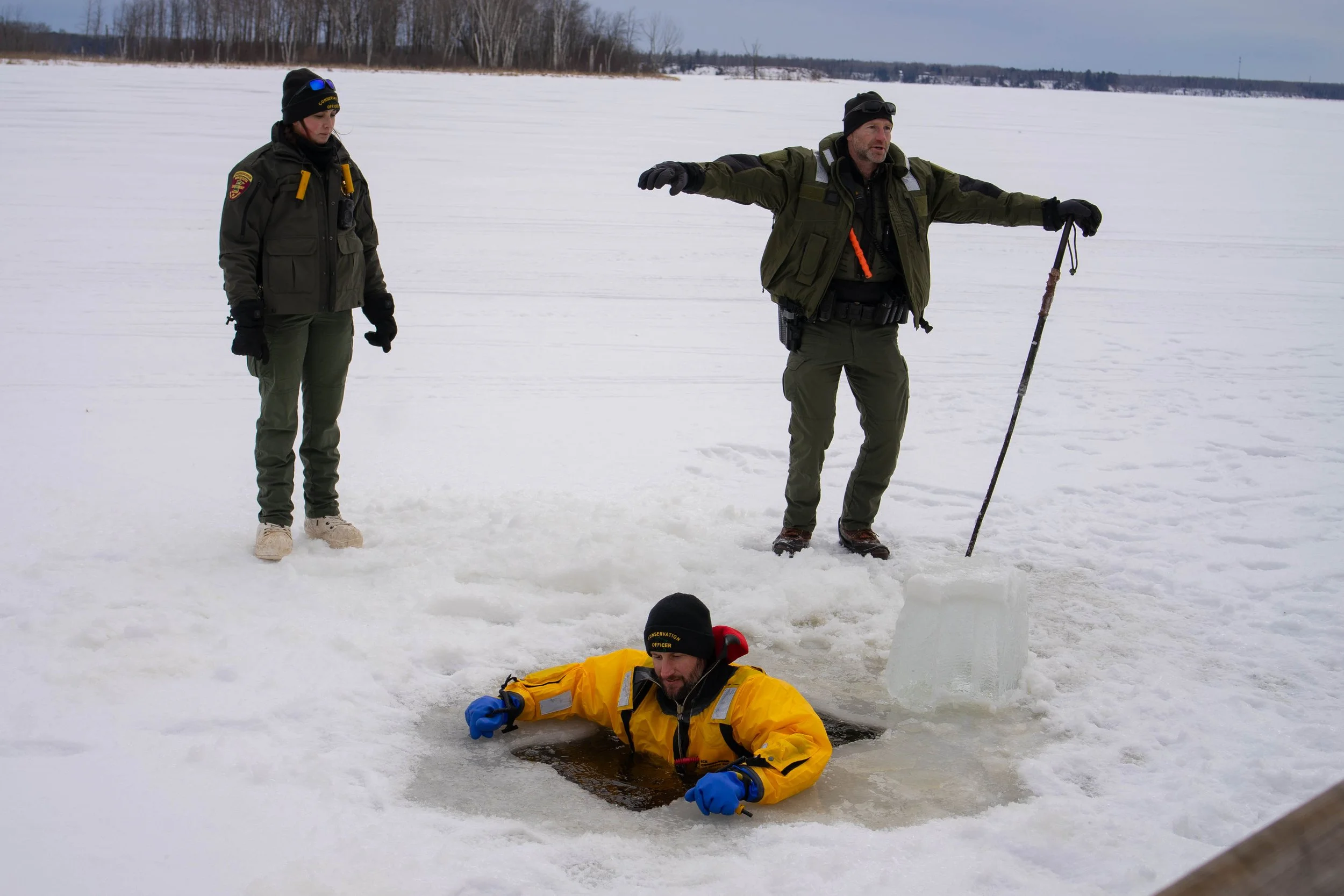
DRN Officials demonstrate what to do if someone falls through the ice.
Credit: Kieley Jacobson
In the demonstration, officials gave instructions on how to get out if someone falls through the ice. If that happens, the priority is to remain calm. Then try to get your arms and chest up over the ice, then throw your feet behind you and start kicking while simultaneously pulling yourself out of the water. It is important not to reach too far when pulling yourself out, as the farther you reach, the harder it is to pull yourself up. Once on the ice, lie flat and roll sideways until on a safe patch of ice or on shore. It is important to go the same way you came since you don’t know how stable the ice in the other direction will be.
Time is very critical in cold water. Officials emphasized the 1-10-1 rule if in the water for an extended period of time. This consists of 1 minute of controlled breathing, 10 minutes of mindful movement, and up to 1 hour before hypothermia will hit. Dressing for the temperature of the water rather than the outside temperature can increase survival time in this case.
Another thing to note is that if you see someone fall through the ice, do not go over to them, since that could lead to you falling in as well. Instead, call 911 right away and try to keep the person who fell calm.
This event was held by the St. Louis River Alliance as part of an agreement they have with the Minnesota Pollution Control Agency to help connect people to the river.
“We’re trying to incorporate safety into everything we do so that people feel more comfortable being on the river,” says Kris Eilers, the executive director of the St. Louis River Alliance. “We want to get people outside and out on the river, and we want to get people to meet each other. It's a good way of building community, and the more people that feel safe to be on the river, the more people connect with it and take care of it.”
As spring approaches and temperatures rise, people must be properly educated on the risks of going out on the ice and make sure they are prepared and have good judgment on safe ice conditions.